inquiry
Leave Your Message

Where to Find Top Parts Bin Mold Manufacturers?

Finding a reliable Parts Bin Mold manufacturer requires more than comparing online prices. It demands evidence.

The global injection molded plastics market reached approximately USD 387.7 billion in 2022, according to Grand View Research. The same report projects continued growth through 2030, driven by packaging, automotive, electronics, and industrial applications. This expansion creates more suppliers, but not every factory offers equal mold expertise.

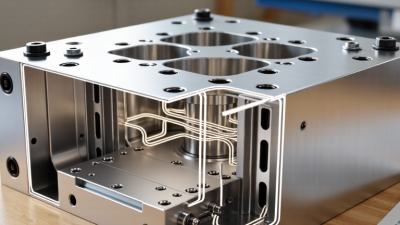
A serious manufacturer should demonstrate toolroom capacity, material knowledge, dimensional control, and repeatable production records. Ask for cavity layouts, steel specifications, mold-flow analysis, and sample parts. A transparent supplier should explain cooling channels, draft angles, ejection marks, and expected cycle times. Small details matter. A bin that sticks can slow an entire warehouse line.

John Beaumont, a recognized injection-molding engineer and author, states, “The mold is the heart of the injection molding process.” His observation remains practical, especially when selecting a Parts Bin Mold partner. The best supplier understands the mold before discussing the final unit price.

Industry guidance, including ISO 20457, also highlights the importance of mold accuracy, inspection, and performance expectations. Reports from MarketsandMarkets identify automation and higher production efficiency as major forces in injection molding. Therefore, manufacturers with CNC machining, coordinate-measuring equipment, and documented quality systems deserve closer attention.

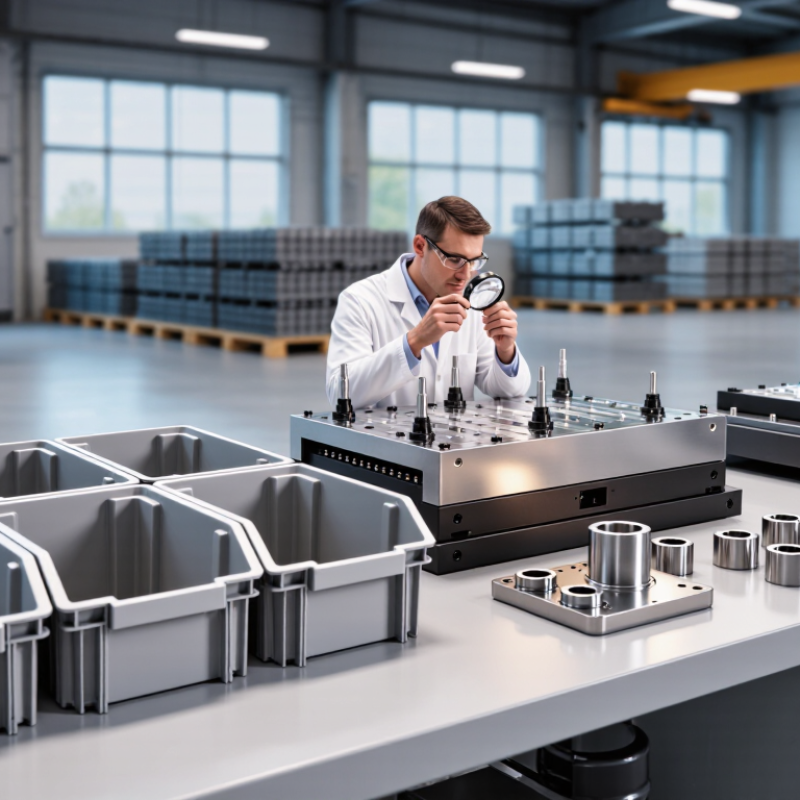
Still, no supplier is perfect. Factory photographs can mislead. Certifications may not prove daily discipline. A careful buyer should request recent references, video inspections, and trial samples before signing a production agreement. That extra step feels slow, yet it often prevents expensive corrections later.
Where to Find Top Parts Bin Mold Manufacturers?

Understanding the Role of Parts Bin Mold Manufacturers

Parts bin mold manufacturers do more than cut steel and deliver tooling. They translate storage needs into repeatable plastic parts. A reliable manufacturer studies bin dimensions, wall thickness, stacking loads, and production volume. This work affects fit, durability, and cycle time. Experienced teams review drawings, resin behavior, cooling layouts, and ejection marks before machining begins. Small choices matter. A poorly placed gate can leave visible scars or uneven walls.

Their role continues after the first trial shot. They inspect sample bins, measure critical points, and adjust the mold when results miss tolerance. Good communication is essential here. Engineers should explain changes with data, not vague promises. Buyers can find suitable manufacturers through industry directories, technical exhibitions, referrals, and verified supplier platforms. Ask about steel selection, mold life, maintenance access, and inspection records. A polished sample may hide weak corners, so appearance alone should not decide a supplier.

Tips:
Request a trial report.
Compare actual samples.
Check response times.
Discuss spare components.
Confirm revision control.
Ask how defects are corrected.

No mold plan is perfect. Even experienced teams can underestimate cooling problems or assembly pressure. Careful testing exposes those weaknesses before large-scale production begins.

Key Criteria for Evaluating Mold Manufacturers

Where to Find Top Parts Bin Mold Manufacturers?

Evaluating a parts bin mold manufacturer requires more than comparing quotations. Grand View Research valued the global injection molding machine market at about USD 15.6 billion in 2023, reflecting strong demand for repeatable production. That demand also exposes weak tooling decisions. Ask for mold-flow analysis, steel specifications, cavity balance, and documented dimensional results. A reliable supplier should explain how each decision affects cycle time, warpage, and bin stacking accuracy.

Factory evidence matters. Request recent inspection records using coordinate measuring machines, not only attractive sample parts. Check whether the supplier controls temperature, cooling channels, polishing, and preventive maintenance. ISO 9001 certification can support process discipline, but it does not guarantee excellent molds. Audit the actual workshop. Look for organized tool storage, traceable material certificates, and technicians who can discuss repairs clearly. Small details reveal maturity.

Production capacity needs practical testing. Ask for a pilot run using the intended resin and colorant, then inspect twenty or more consecutive bins. Measure wall thickness, rim dimensions, and fit between stacked units. The PlasticsEurope 2023 report recorded 400.3 million tonnes of global plastics production in 2022, showing the scale of this sector. Yet volume alone proves little. A manufacturer may promise tight tolerances without showing long-run data. That should trigger reflection. Cost remains important, but an inexpensive mold with unstable cooling can create expensive rework, delayed shipments, and rejected inventory.

Where to Search for Reliable Parts Bin Mold Suppliers

Reliable parts bin mold suppliers are easier to find when you search beyond general marketplace listings. Industry directories, plastics trade fairs, and local manufacturing associations often provide stronger leads. Ask purchasing managers and injection molding technicians for referrals. Their experience can reveal problems that websites rarely mention.

Review each supplier’s technical evidence carefully. Look for mold design samples, steel specifications, tolerance data, and documented quality procedures. A dependable supplier should explain cooling channels, draft angles, ejection systems, and expected mold life. Request a small trial mold or sample parts when possible. Inspect the bin’s wall thickness, corner strength, surface finish, and stacking accuracy. A polished website can still hide weak engineering. That mistake is easy to make.

Tips: Contact at least three suppliers. Send the same drawing and material requirements to each company. Compare response speed, technical questions, maintenance support, and delivery promises. Ask for recent customer references, factory photographs, and inspection records. Confirm who owns the mold and how design changes are handled. Do not choose only by price. A cheaper mold may create flashing, uneven walls, or repeated production delays. Leave room for doubt, too; supplier claims should be checked against samples, measurements, and written agreements.

Where to Find Top Parts Bin Mold Manufacturers?

Use this practical qualification scorecard when comparing parts bin mold suppliers. Higher scores indicate verification items that should receive greater attention before placing an order.

The strongest suppliers should be able to provide clear DFM feedback, documented material information, trial samples, dimensional inspection results, and evidence of production capacity. Search through specialized B2B directories, industry associations, trade exhibitions, and professional referrals, then apply the same checklist to every candidate.

How to Compare Manufacturing Capabilities and Services

Where to Find Top Parts Bin Mold Manufacturers?

Comparing parts bin mold manufacturers requires evidence, not polished photographs. Ask for projects using similar plastics, wall thicknesses, and cavity counts. Review dimensional reports, mold-flow results, and trial records before discussing price. A capable factory should explain shrinkage, draft angles, cooling channels, and ejection risks clearly. Check its machining equipment, inspection tools, and mold maintenance area. Numbers matter.

Evaluate the complete service path. Strong suppliers often provide design-for-manufacturing feedback, prototype reviews, flow analysis, steel recommendations, sampling, and production support. Ask who handles design changes and how quickly engineers respond. Request a sample mold trial with measured parts, not only visual approval. See the parts. Inspect stack alignment, gate marks, warping, surface texture, and cycle time. These details reveal more than a capability chart.

Reliability also depends on process control. Confirm material traceability, inspection frequency, revision control, and backup plans for critical components. A supplier may promise a short lead time, yet limited machine capacity can create delays during peak periods. Ask for a realistic schedule with machining, testing, corrections, and transport included. I would not accept vague answers about tolerances or after-sales repairs. No supplier is perfect. Even experienced teams can miss a cooling imbalance or underestimate packaging stress. A useful comparison leaves room for those problems and shows how the manufacturer will document, correct, and prevent them.

Where to Find Top Parts Bin Mold Manufacturers? - How to Compare Manufacturing Capabilities and Services
Evaluation Dimension What a Capable Manufacturer Should Offer Practical Data or Benchmark Evidence to Request Priority
Mold Design Capability Design support for parting lines, draft angles, ribs, bosses, wall thickness, ejection, and gate locations. Draft angles are commonly required on molded surfaces; the exact value depends on texture, resin, depth, and ejection design. 2D drawings, 3D mold-flow review, design-for-manufacturing report, and revision history. Critical
Mold Steel Selection Steel selection matched to production volume, resin abrasiveness, corrosion risk, surface finish, and maintenance requirements. Pre-hardened steels are often used for moderate production; hardened tool steels are generally selected for higher wear resistance and longer service life. Steel grade certificate, hardness record, heat-treatment documentation, and warranty terms. Critical
CNC Machining Accuracy Multi-axis machining, controlled workholding, documented inspection, and the ability to maintain dimensional consistency across mold components. Common precision targets for mold components are often in the hundredths-of-a-millimeter range, but the required tolerance must be defined by the part drawing. CMM inspection report, machining capability statement, calibration records, and sample dimensional data. Critical
Electrical Discharge Machining Wire EDM and sinker EDM for deep ribs, sharp internal features, narrow slots, and geometries that are difficult to machine conventionally. EDM can produce intricate features, while electrode design and spark-gap control influence final dimensional accuracy and surface finish. EDM process sheet, electrode strategy, sample inserts, and surface-finish measurements. High
Surface Finishing Polishing, texturing, chemical etching, bead blasting, and other finishes appropriate for the part appearance and release behavior. SPI-style or equivalent finish descriptions should be specified on the mold drawing rather than communicated only by general terms such as “smooth.” Finish samples, approved texture reference, polishing records, and cavity inspection photographs. High
Hot Runner and Cold Runner Options Runner-system recommendations based on resin type, part weight, gate location, cycle time, and cosmetic requirements. Hot runners can reduce runner waste, while cold runners may offer simpler maintenance and lower initial system complexity. Runner-layout proposal, thermal-control specifications, maintenance procedure, and spare-parts list. High
Cooling Design Balanced cooling circuits designed around cavity geometry, wall thickness, cycle-time targets, and warpage control. Cooling performance is commonly evaluated through temperature balance, cycle-time stability, and part warpage rather than channel quantity alone. Cooling-layout drawing, flow analysis, pressure-test record, and trial-cycle data. Critical
Ejection System Reliable ejector pins, sleeves, lifters, stripper plates, or air-ejection solutions that prevent deformation and visible marks. Ejection force depends on shrinkage, surface area, draft, material, texture, and part geometry; it should be validated during mold trials. Ejection simulation, ejector-layout drawing, trial video, and part-mark inspection results. High
Mold Trial and Validation Structured trial stages with documented adjustments before final approval and production release. A professional validation process normally includes first-shot sampling, dimensional review, process-window checks, and corrective-action records. Trial report, sample approval record, dimensional inspection report, and action-closure log. Critical
Dimensional Inspection Inspection of critical dimensions, appearance, fit, function, and repeatability using calibrated measuring equipment. Inspection frequency and tolerance should follow the approved drawing, control plan, and risk level of each feature. Inspection plan, CMM report, gauge calibration certificates, and capability-study results where applicable. Critical
Production Capacity Enough engineering, machining, assembly, and trial capacity to support the required delivery schedule. Capacity should be assessed by available machine hours, current workload, shift pattern, bottleneck equipment, and backup resources. Capacity plan, production schedule, equipment list, utilization summary, and contingency plan. High
Lead-Time Control A milestone-based schedule covering design approval, steel ordering, machining, assembly, first trial, corrections, and final acceptance. Actual lead time varies with mold size, cavity count, steel grade, surface finish, automation, and the number of trial iterations. Detailed project schedule, milestone definitions, risk register, and change-control procedure. High
Quality Management Documented procedures for incoming materials, machining, assembly, inspection, nonconformance control, and final release. A traceable quality system should connect material records, process checks, inspection results, and corrective actions. Quality certificates, control plan, nonconformance procedure, internal audit records, and sample inspection files. Critical
Engineering Communication Clear technical communication covering drawings, resin data, tolerances, revisions, trial feedback, and approval decisions. Response quality can be compared by technical completeness, response time, revision control, and documented ownership of open issues. Communication workflow, project-contact list, engineering review template, and revision-management records. High
Maintenance and Spare Parts Preventive-maintenance instructions, replaceable wear components, lubrication guidance, and service support after delivery. Maintenance intervals should be based on cycle count, resin characteristics, mold construction, and observed wear—not only calendar time. Maintenance manual, spare-parts recommendation, wear-limit chart, and service-response commitment. High
Total Cost of Ownership Evaluation of tooling price together with trial costs, modifications, maintenance, spare parts, downtime risk, and expected service life. The lowest quotation may not provide the lowest total cost when tool life, cycle time, scrap, and maintenance are included. Itemized quotation, warranty terms, maintenance estimate, modification rates, and expected service-life assumptions. Critical

Steps for Selecting the Right Parts Bin Mold Manufacturer

Selecting the right parts bin mold manufacturer requires more than comparing prices. Start by checking experience with storage bins, stacking features, wall thickness, and repeated-use demands. Ask for previous project examples, tooling photos, and sample parts. Ask for evidence.

Review the manufacturer’s engineering process carefully. A capable team should discuss draft angles, gate locations, cooling channels, shrinkage, and ejection marks before production begins. Request a detailed mold design review and confirm the steel grade, expected cycle life, and maintenance plan. These details affect surface quality and long-term production stability. A practical manufacturer will also explain possible risks instead of promising perfect results.

Quality control must be visible and consistent. Check whether the factory uses dimensional reports, trial-run records, and material traceability. Request a pre-production sample and measure key areas, such as rim alignment and stacking clearance.

Communication matters too. Slow replies may become costly during tooling changes. Capacity should match your schedule, but avoid choosing a supplier only because it offers the fastest delivery.

In my experience, an unusually low quote often hides limited testing or weak after-sales support. That assumption can be wrong, so verify it with clear documents and reference checks.

Visit the facility when possible. Observe cleanliness, machine condition, inspection equipment, and how technicians handle defects. A reliable partnership grows from measurable details, honest communication, and realistic correction plans.