
Leave Your Message
Buying a Box Mold across borders is rarely just a price comparison. It is a decision about production stability, product quality, maintenance, and communication. A low quotation may hide weak steel, limited cooling channels, or unclear tolerance control. The first sample can look acceptable. Months later, wear may reveal the real cost.
Michael Chen, a veteran Box Mold engineering consultant, explains, “A dependable mold is designed for the buyer’s production reality, not merely for the first sample.” His view reflects practical factory experience. Mold steel, cavity balance, ejection design, cycle time, and expected annual output all deserve close attention. So do CAD files, inspection reports, spare-part plans, and trial-shot evidence. Ask for details. Vague promises are not technical documents.
Global buyers also need to examine supplier capability. Can the manufacturer support revisions across time zones? Are mold-flow analysis and dimensional reports available? Does the supplier explain cooling performance with photographs or drawings? Small details matter. A blocked water line can increase cycle time. A poor gate position can leave visible marks on a clean box surface.
No checklist is perfect. Buyers may still overlook packaging, transport vibration, or future material changes. That is where careful review helps. Compare suppliers using the same specifications. Record assumptions before signing. Confirm who owns the final design data. The following ten Box Mold buying tips focus on those practical decisions, helping international buyers reduce avoidable risk while choosing tooling that performs beyond the first production run.
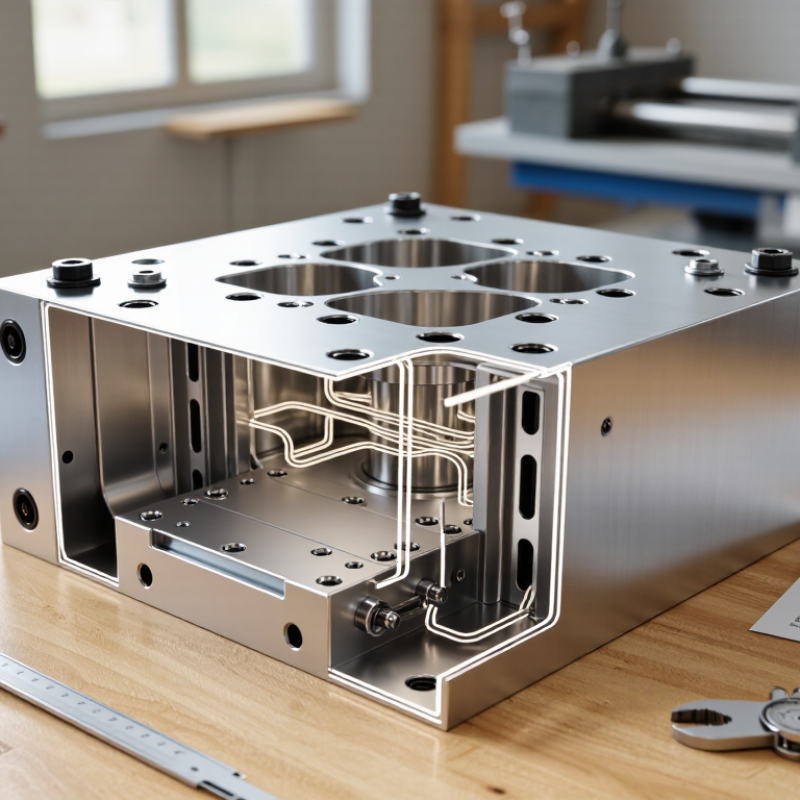
Defining box mold requirements begins with the product, not the machine. A food container, electrical housing, and cosmetic box demand different mold structures. Record the box length, width, height, wall thickness, corner radius, and expected weight. Include the material grade and shrinkage range. Small details matter. A 0.5-millimeter change can affect stacking, lid fit, and surface appearance.
During projects, I have seen buyers request “a standard box mold” without supplying drawings. That shortcut often creates revisions, delayed sampling, and avoidable tooling costs. Ask for a 2D drawing, 3D model, sample, or clear dimensional sketch. Specify annual volume, cycle target, cavity count, and available molding equipment. The machine’s platen size, injection capacity, and ejection system must match the mold. Do not assume a larger mold is better. It may increase cost without improving output.
Material behavior should guide gate position, cooling layout, draft angles, and ejection design. For thin walls, uneven cooling can cause warpage near the corners. For textured surfaces, draft requirements may be higher than expected. Review these risks with an experienced mold engineer before ordering steel. I also recommend a tolerance table, though many buyers overlook it. Not every dimension needs the same precision. Overly tight tolerances can raise machining costs without improving the final product. Keep one approved reference sample for inspection. It makes disagreements less subjective.
| No. | Requirement Dimension | Practical Specification or Reference Range | Information to Provide to the Mold Supplier | Recommended Verification | Priority |
|---|---|---|---|---|---|
| 1 | Intended product and use | Define whether the box is for food, household storage, industrial packaging, medical use, or another application. State indoor or outdoor exposure and expected service conditions. | Product function, contents, temperature range, load requirements, stacking conditions, cleaning method, and regulatory market. | Review a written product requirement specification before requesting a quotation. | Critical |
| 2 | Overall dimensions and tolerances | Specify length, width, height, lid fit, corner radius, and dimensional tolerances. General molded dimensions commonly require tighter control on functional interfaces than on nonfunctional surfaces. | 2D drawings, 3D CAD data, critical dimensions, datum scheme, and acceptable assembly clearance. | Use a dimensional inspection plan and confirm tolerances with a first-off sample. | Critical |
| 3 | Resin selection and material grade | Common box materials include PP for chemical resistance and living hinges, HDPE for impact resistance, and ABS for a more rigid appearance. The exact grade controls shrinkage, processing, and performance. | Polymer family, approved grade, colorant, recycled-content requirement, food-contact or other compliance requirement, and material data sheet. | Confirm the resin grade, melt-flow data, shrinkage data, and compliance documentation before steel design. | Critical |
| 4 | Wall thickness and uniformity | A consistent wall is generally easier to fill and cool. Many general-purpose injection-molded box designs start around 1.5–3.0 mm, but the suitable value depends on resin, flow length, stiffness, and product size. | Nominal wall thickness, allowable variation, ribs, bosses, hinge sections, and any thick cosmetic areas. | Request mold-flow analysis or filling-risk review for long flow paths, ribs, and thick-to-thin transitions. | High |
| 5 | Draft angle and release direction | A starting guideline is approximately 0.5°–1° per side for smooth, nontextured surfaces. Textures, deep walls, tight cores, and surface-sensitive finishes generally require additional draft. | Parting line, ejection direction, texture depth, internal undercuts, and areas where witness marks are acceptable. | Check draft analysis in CAD and conduct an ejection review before finalizing the mold. | High |
| 6 | Gate, runner, and venting design | Gate location should support balanced filling and minimize visible marks on functional or cosmetic surfaces. Adequate vents are needed near end-of-fill areas to reduce burn marks and short shots. | Preferred gate-mark locations, cosmetic zones, weld-line restrictions, anticipated cycle rate, and whether hot or cold runner tooling is acceptable. | Review filling, packing, weld-line, air-trap, and gate-mark risks using a mold-flow study or supplier design review. | High |
| 7 | Cooling and expected cycle time | Cooling-channel layout should follow the product geometry as consistently as practical. Cycle time depends on resin, wall thickness, mold temperature, ejection temperature, and machine conditions. | Target annual volume, required cycle-time objective, available cooling connections, water-quality limitations, and production schedule. | Require a cooling-circuit drawing and confirm cycle time during a documented mold trial. | High |
| 8 | Cavity count and production volume | Select cavity count from forecast volume, machine capacity, tooling budget, acceptable downtime, and required delivery rate. A higher cavity count can increase output but also raises balance and maintenance demands. | Annual demand, monthly peak demand, operating days, shifts, target utilization, machine platen size, and injection capacity. | Compare single-, two-, and multi-cavity scenarios using projected total cost per part rather than mold price alone. | High |
| 9 | Mold steel, surface finish, and service life | Steel selection should reflect resin abrasiveness, corrosion risk, projected shots, surface requirements, and maintenance conditions. Polished, textured, and matte surfaces require different finishing processes. | Target shot count, resin additives such as glass fiber, corrosion exposure, appearance standard, spare-part expectations, and maintenance capability. | Request a material certificate, hardness or heat-treatment record where applicable, surface standard, and preventive-maintenance schedule. | High |
| 10 | Testing, acceptance, and export documentation | Define sample approval, dimensional limits, appearance criteria, functional tests, packaging, spare parts, warranty terms, and ownership of design files before purchase. | Factory acceptance criteria, sample quantity, inspection report format, trial conditions, delivery terms, documentation language, and replacement-part list. | Use an approved sample, signed acceptance report, traceable inspection records, and a final mold handover checklist. | Critical |