2026 Top Box Mold Trends and Innovations You Need to Know?
The evolution of box mold technology is critical to the manufacturing landscape. By 2026, trends indicate an increased demand for customization and sustainability in box mold design. Reports from industry analysts suggest that the global box mold market is set to reach $7.5 billion by 2026, highlighting the need for innovation.
Manufacturers are focusing on advanced materials and processes to improve efficiency. The introduction of recycled materials in box molds is projected to rise by 30%. This shift not only meets consumer expectations but also addresses environmental challenges. However, the reliance on new technologies can sometimes lead to unforeseen issues. For example, the integration of automation may require retraining of the workforce.
Additionally, the focus on precision and accuracy in box mold production can yield high-quality products. Yet, achieving this perfection can come with high costs and technical difficulties. The industry must reflect on balancing innovation with practicality. Understanding these dynamics is crucial for staying competitive in the ever-evolving box mold market.

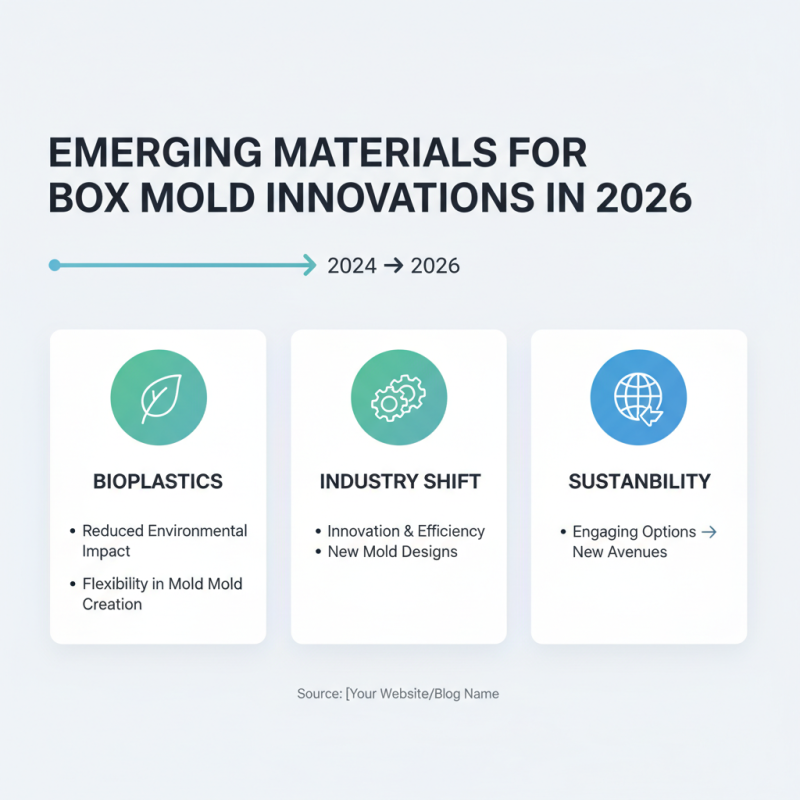
Emerging Materials for Box Mold Innovations in 2026
As we look toward 2026, the box mold industry is on the brink of transformation. Emerging materials are driving innovation and efficiency in mold design. For instance, bioplastics are gaining traction. These materials not only reduce environmental impact but also provide flexibility in mold creation. Engaging with these options opens new avenues for sustainability.
Another exciting trend is the incorporation of advanced composites. These materials boast high strength-to-weight ratios. They can withstand extreme conditions while minimizing operational costs. However, the challenge lies in the initial investment and the learning curve associated with new technologies. Companies must balance innovation with practical application.
Furthermore, exploring 3D printing in box mold creation presents mixed opportunities. Customization becomes simpler and faster. Yet, the reliability of printed molds often raises concerns. It's a continuous journey of learning. Companies must critically assess both the benefits and limitations of new materials. Embracing the right innovations can lead to enhanced productivity and market advantage.
Advancements in 3D Printing Technology for Box Mold Design
The realm of box mold design is undergoing an exciting transformation with advancements in 3D printing technology. This innovative process allows for intricate designs and complex geometries that traditional methods cannot achieve. Designers can now create molds with unique features, optimizing functionality and aesthetics without the need for extensive tooling.
However, not all 3D printing techniques are equally effective for mold creation. Some may produce lower quality surfaces or misalignments. Fine-tuning of the printing parameters is crucial. Designers must experiment to find the right balance for each project. Additionally, material selection plays a significant role in durability and final output.
The integration of 3D printing with box mold design presents challenges, yet also opportunities for exploration. There's a chance to develop more sustainable practices, such as reducing waste material. As the technology evolves, remaining flexible and open to new methods is vital. Each attempt contributes to refining the design process and pushing the boundaries of what box molds can achieve.
Sustainable Practices in Box Mold Manufacturing: Trends in 2026
In 2026, sustainability will be at the forefront of box mold manufacturing. This shift is driven by consumer demand for eco-friendly practices. Manufacturers are exploring bioplastics and recycled materials for mold production. These alternatives reduce environmental impact significantly. However, sourcing these materials can be challenging, creating supply chain concerns.
Many companies are also implementing energy-efficient processes in their operations. Innovative techniques, like using renewable energy sources, become more common. This not only lowers carbon footprints but can also reduce operational costs. Yet, transitioning to these practices requires time and investment. Some manufacturers may struggle with the initial costs associated with new technologies.
Collaboration is key in this evolving landscape. Companies are partnering with research institutes to improve efficiency and sustainability in production. Knowledge sharing can help overcome obstacles that individual companies face. As box mold manufacturing continues to innovate, the road ahead will demand adaptability and commitment to sustainable practices. Balancing profit with responsibility will be an ongoing challenge for the industry.
Sustainable Practices in Box Mold Manufacturing: Trends in 2026
Smart Technology Integration in Box Mold Production Processes
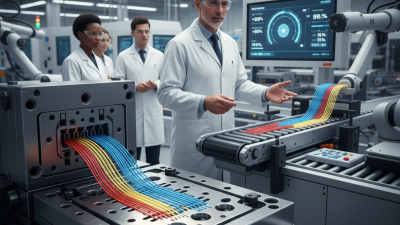
The integration of smart technology in box mold production processes is transforming the industry. Automated systems can optimize mold design and manufacturing. Sensors and AI analyze real-time data, improving efficiency and precision. This shift not only streamlines production but also minimizes waste.
However, relying heavily on technology raises concerns. Machines are only as good as their programming. If the data fed into these systems is flawed, the output can be problematic. Errors in mold designs can lead to production delays and increased costs. Companies must balance automation with skilled craftsmanship.
Furthermore, the implementation of smart technology requires ongoing training. Workers need to adapt to new tools and systems. The learning curve can be steep. Regular updates and maintenance of technology are also crucial for optimal performance. Without these, businesses risk falling behind in a rapidly evolving market.
2026 Top Box Mold Trends and Innovations You Need to Know
| Trend/Innovation |
Description |
Impact on Production |
Expected Adoption Rate (%) |
| Smart Sensors |
Integration of smart sensors for real-time monitoring of mold conditions. |
Improved efficiency and reduction in downtime. |
70% |
| AI Optimization |
Use of AI to optimize mold design and production processes. |
Enhanced design accuracy and shorter production times. |
60% |
| 3D Printing |
Utilizing 3D printing technology for rapid prototyping of molds. |
Reduction in time and costs for mold development. |
50% |
| Sustainable Materials |
Adoption of eco-friendly materials for mold construction. |
Enhanced sustainability and reduction of environmental impact. |
65% |
| Cloud-Based Solutions |
Utilizing cloud technology for data storage and access. |
Improved collaboration and data management. |
55% |
Market Demands Driving the Evolution of Box Mold Designs in 2026
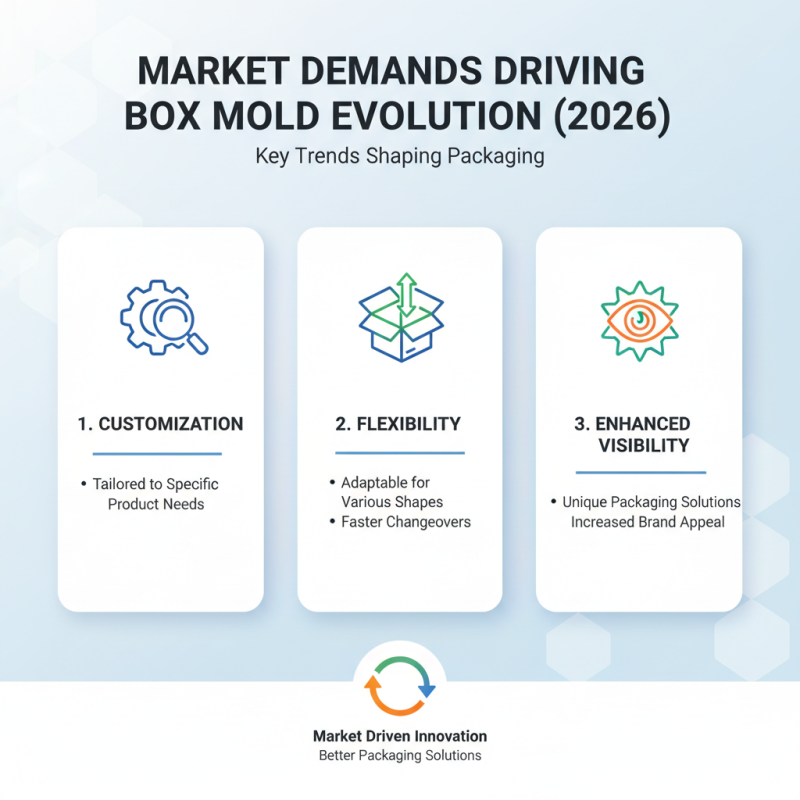
As we look ahead to 2026, the box mold industry is facing exciting changes driven by market demands. Customization is at the forefront of box mold design. Companies now seek molds that cater to specific product requirements. This flexibility allows for better packaging solutions, enhancing product visibility.
Sustainability is another critical factor shaping mold innovation. More businesses are prioritizing eco-friendly materials. This shift influences mold production techniques. Many manufacturers are investing in biodegradable plastics and recyclable materials. However, challenges remain, including sourcing reliable suppliers and maintaining cost efficiency.
Emerging technologies also play a role in the evolution of box molds. 3D printing offers rapid prototyping solutions. This allows for quicker adjustments to designs based on consumer feedback. Nevertheless, some worry about the durability of these molds over time. As expectations evolve, continuous improvement is necessary to meet both aesthetic and functional demands.