What Is a Logistics Container Mold Used For?
A Logistics Container Mold is a tool used to shape plastic parts for reusable containers that move goods through warehouses, factories, and distribution centers. In injection molding, heated plastic enters a shaped cavity, cools, and forms a crate, tote, or bin. The finished container may carry packaged food, components, or other everyday products. Its walls, base, handles, and stacking features all begin with the mold’s design.
Mold details affect more than appearance. A reinforced corner can help a loaded container withstand repeated handling, while a smooth interior can make cleaning easier. Drainage openings, interlocking rims, and label areas may also be built into the design. Small details matter. They can influence material use, cycle time, and how reliably containers stack. Still, no single mold suits every job. Container size, expected load, plastic type, and production volume all shape the right choice.
For buyers and manufacturers, evaluating a Logistics Container Mold means looking beyond the quoted price. Check the intended container design, cooling layout, expected production conditions, and maintenance requirements. Ask how the mold will be tested before full production. A sample part can reveal warping, rough edges, or a handle that feels awkward in use. Not every flaw appears on a drawing. Careful review helps connect mold design to real handling needs, though actual performance still depends on materials, machine settings, and regular maintenance.
What a Logistics-Container Mold Produces: Reusable Plastic Totes
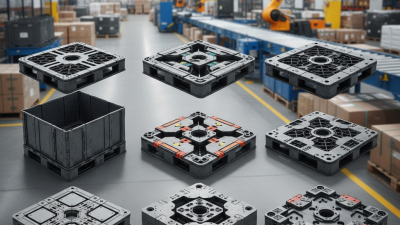
A logistics-container mold produces reusable plastic totes for moving parts, produce, tools, or packed goods through supply chains. It shapes the tote’s walls, base, handles, and stacking features. These details affect how securely containers nest when empty and stack when full. A molded rib can strengthen a wall without making it solid and heavy. Drainage holes may help wash-down operations, while smooth interior corners can make cleaning easier. Small choices matter.
The mold also determines whether totes fit conveyors, shelving, and pallets. A mismatch can cause jams or wasted space, even when the tote itself is sturdy. Designers usually consider load weight, repeated handling, cleaning, and exposure to sunlight before setting the geometry. Reusable packaging can bring environmental benefits, but only when containers make enough trips and return efficiently. A Franklin Associates life-cycle assessment commissioned by the Reusable Packaging Association reported 29% lower greenhouse-gas emissions and 95% less solid waste for reusable plastic containers than single-use corrugated boxes in its modeled system. Those results depend on study assumptions, including reuse cycles and transport distances. Real operations may differ. The mold is only one part of that equation.
What Is a Logistics Container Mold Used For? - What a Logistics-Container Mold Produces: Reusable Plastic Totes
| Molded tote feature |
Typical example |
Logistics purpose |
| Tote body |
Rigid, reusable container formed as a single molded shell |
Holds and protects goods during storage, picking, and transport |
| Footprint and height |
A common footprint is approximately 600 × 400 mm; tote heights vary by application |
Supports consistent handling and efficient use of shelving, carts, and pallet space |
| Resin material |
Common choices include polypropylene (PP) and high-density polyethylene (HDPE) |
Provides a durable plastic tote; the appropriate resin depends on the operating environment and design requirements |
| Stacking features |
Molded rims, corners, or locating features designed to align compatible totes |
Helps create stable stacks when containers are loaded and used as designed |
| Nesting geometry |
Tapered sides on designs intended to nest when empty |
Reduces storage and return-transport space for empty totes |
| Base and wall reinforcement |
Ribs, reinforced corners, and shaped base surfaces molded into the tote |
Adds structural support; load capacity depends on the tote design, resin, and conditions of use |
| Handles and grip areas |
Molded handholds or grip openings, where specified by the design |
Makes manual handling easier for appropriately sized and loaded containers |
| Ventilation openings |
Optional slots or perforations in the walls or base |
Allows airflow or drainage when needed; solid-wall versions are used when contents need more enclosure |
| Lid compatibility |
A rim or locating edge designed to fit a compatible optional lid |
Helps cover contents during handling and storage; lid fit is specific to the container design |
| Identification surfaces |
Flat areas or molded label-card recesses; barcode labels may be added after molding |
Supports item identification, sorting, and inventory tracking |
| Typical applications |
Warehouses, distribution operations, manufacturing, and reusable delivery loops |
Moves parts, packaged goods, and supplies between work areas or locations |
Specifications vary by tote design and mold. Dimensions and features shown are general examples, not universal product specifications.
Core Mold Components: Cavity, Core, Cooling, and Ejection Systems
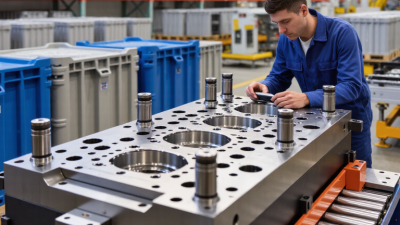
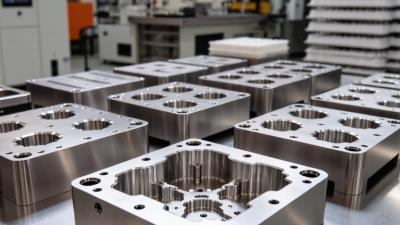
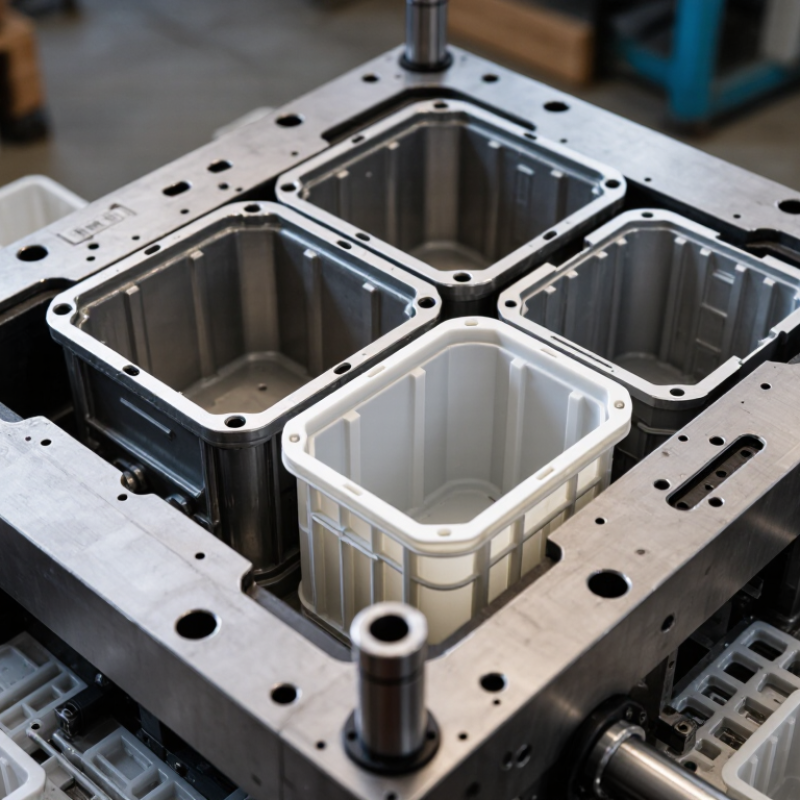
A logistics container mold forms reusable plastic totes, bins, and stackable crates. Its cavity shapes the container’s outer surfaces, while the core forms the interior. The space between them sets the wall thickness. Ribs, handles, and stacking feet are built into these surfaces. Even a small mismatch can leave uneven walls or make containers fit poorly. Details matter.
Cooling channels carry heat away after molten plastic fills the mold. Even cooling helps control cycle time and reduces warping or shrinkage. Channel placement depends on the container’s shape and thickness; deep corners may cool more slowly than broad, flat panels. Mold trials can reveal hot spots that calculations miss. That part takes patience.
Once the plastic has cooled enough to hold its shape, the ejection system releases it. Ejector pins or plates apply force at selected points, while draft angles help the container slide free. Poorly placed pins can leave marks or distort a warm wall. The cavity, core, cooling, and ejection systems must work together, though no layout suits every container. A sturdy rib can still trap heat, and that is easy to overlook.
Injection Molding: Turning Thermoplastic Pellets into Containers
A logistics container mold gives molten thermoplastic its working shape: walls, corners, ribs, handles, and stacking edges. The process starts with pellets in a hopper. A rotating screw conveys and melts them, then injects the hot material into a closed, cooled mold. Once the plastic solidifies, the mold opens and ejector pins release the container. The fit matters. A slight change in wall thickness can affect stiffness, cooling time, and how securely containers stack.
Mold design balances durability with material use. Deep ribs can reinforce a broad sidewall without making every section equally thick, while rounded corners help reduce stress concentrations. Cooling channels also matter; uneven cooling may cause warping, leaving a container that rocks on a warehouse floor. PlasticsEurope’s Plastics – the Fast Facts 2024 estimates that global plastics production reached 413.8 million tonnes in 2023. The OECD’s Global Plastics Outlook reports that packaging made up 40% of plastic waste generated in 2019. These figures describe different years and measures, but they underline why container design deserves care. Reusability depends on more than a sturdy mold: it also depends on the container’s real handling conditions, which designers can misjudge.
VDA 4500 KLTs: The 600 × 400 mm Modular Footprint
A logistics container mold is used to form the body, base, handles, and stacking edges of a reusable parts container. For VDA 4500 KLTs, the 600 × 400 mm footprint provides a common module for warehouse and production layouts. Smaller compatible containers can fit into the same planning grid, helping teams arrange shelves, carts, and pallet loads with less wasted space. The mold must hold these dimensions consistently. The fit matters.
Mold design also shapes practical details. Reinforced corners can help containers withstand repeated handling, while carefully formed rims support stable stacking. A flat, well-designed base can travel more smoothly over conveyor rollers. Draft angles help the molded container release from the tool, but excessive angles may affect usable space or stacking contact. Small trade-offs add up. A container that fits a drawing may still catch on a worn conveyor guide, so real handling trials matter.
The 600 × 400 mm module makes planning simpler, not perfect. Load weight, contents, and handling equipment still influence which container size and wall structure work best. Toolmakers account for material shrinkage and dimensional variation, then verify samples against the intended fit. That check is easy to underestimate.
The 600 × 400 mm footprint is the largest module shown. Smaller footprints—400 × 300, 300 × 200, and 200 × 150 mm—scale in modular steps. Areas are calculated from the listed dimensions.
How Load, Stack, and Impact Tests Verify Container Performance
A logistics container mold forms the container’s walls, ribs, corners, and stacking features.
These details affect how a finished tote or crate carries weight and fits with other units. A small change in wall thickness can alter stiffness, so testing should use containers made with production-intent materials and settings.
Load tests measure how a container behaves under a known weight.
Technicians may place it on a flat surface, add evenly distributed test weights, and record bending or permanent deformation. Stack tests apply force through the base of an upper container, often for a set period. This reveals whether rims, corners, and bottom panels stay aligned. Watch the contact points closely. A container can look sound while its lower edges slowly bow.
Impact tests simulate knocks during handling.
A weighted pendulum or controlled drop may strike a corner, side, or base, while inspectors check for cracks, split seams, and loss of function. Results should include test conditions, sample count, and visible damage, not just a pass mark. Still, a lab test cannot reproduce every warehouse floor, temperature shift, or careless landing. That limitation deserves attention. Repeating tests across several samples gives a more useful picture of consistency than relying on one unusually good unit.