inquiry
Leave Your Message

2026 Best Types of Rack Tray Molds for Global Buyers?

Choosing the right Rack Tray Molds in 2026 requires more than comparing quotations. Global buyers must evaluate cavity design, resin compatibility, cooling performance, tooling life, and production stability. A polished sample can hide weak ribs, uneven wall thickness, or difficult demolding.

Industry reports provide useful direction. Grand View Research forecasts continued growth in thermoformed plastics, supported by food, electronics, medical, and logistics packaging demand. Its market analysis highlights lightweighting and material efficiency as major development drivers. PMMI packaging intelligence reports also emphasize automation, recyclable structures, and regional supply-chain flexibility. These trends directly affect mold selection. A high-cavitation tool may improve output, but only when the forming machine, cooling circuit, and quality controls can support it.

Small details matter.

For example, a tray mold with balanced cooling can reduce warpage around deep corners. Replaceable inserts may simplify maintenance when product dimensions change. Steel grade and surface treatment also influence service life, especially in high-cycle operations. Buyers should request dimensional inspection records, trial-run evidence, and clear maintenance terms. ISO 9001 certification can support process confidence, but it does not replace technical verification.

This guide compares the best Rack Tray Molds for global buyers in 2026. It considers application, material, tooling structure, production volume, and supplier capability. Forecasts remain helpful, not perfect. Actual results depend on factory discipline, machine condition, and local operating costs. A cheaper mold may become expensive after repeated repairs. That risk deserves attention.

2026 Best Types of Rack Tray Molds for Global Buyers?

What Rack Tray Molds Are and How They Support Global Packaging

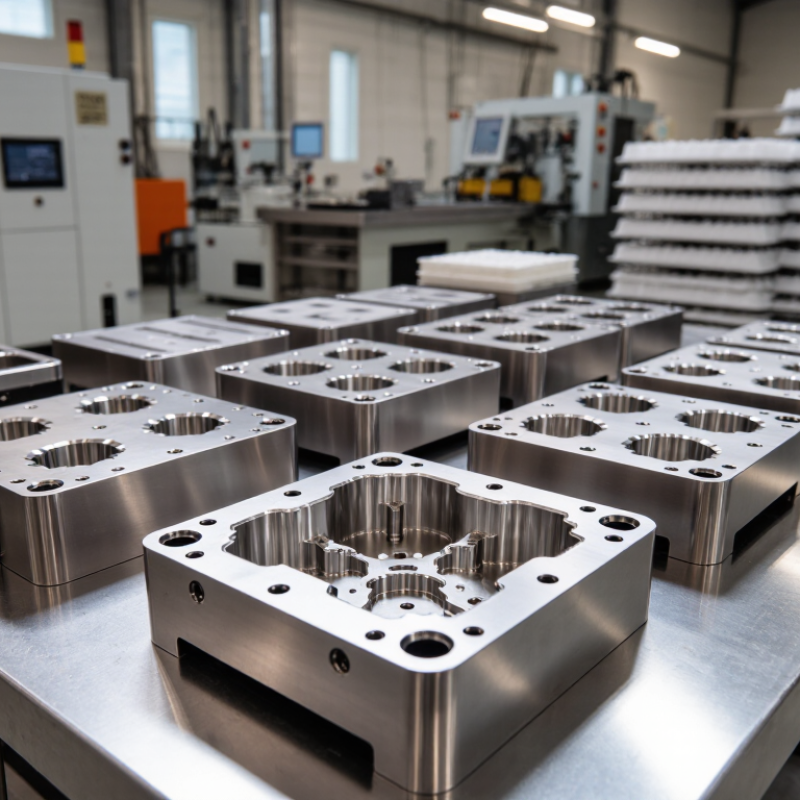
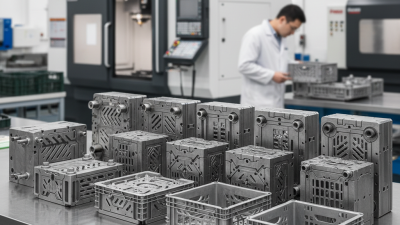
Rack tray molds are tooling systems used to shape trays for storage, transport, and organized handling. These trays often hold components, food containers, medical supplies, or warehouse items. Their cavities, ribs, and stacking features must match the product and operating environment.

Common options include thermoforming molds for lightweight trays and injection molds for stronger, repeat-use designs. Thermoforming usually supports faster changes and lower tooling costs. Injection molding can deliver sharper details, tighter dimensions, and better durability. A reliable mold should include suitable draft angles, balanced cooling, smooth surfaces, and stable ejector positions. Small details matter. A poorly placed rib may create stress marks or prevent clean stacking.

Tips: Global buyers should confirm tray dimensions, material grade, cavity quantity, cycle targets, and local power conditions. Request sample parts before approving production. Check corner radii, wall thickness, nesting clearance, and cleaning access. A mold can look excellent on a drawing and still disappoint during continuous operation. Real testing is essential. It may also reveal that the first design is too complex, too heavy, or difficult to maintain. Ask for inspection records, maintenance guidance, and replacement-part support. Clear documentation reduces misunderstandings across languages, time zones, and production teams.

2026 Best Types of Rack Tray Molds for Global Buyers? - What Rack Tray Molds Are and How They Support Global Packaging

Comparison of Common Rack Tray Mold Types for Global Packaging Applications
Mold Type Typical Forming Process Common Tray Materials Typical Sheet or Part Thickness Typical Production Volume Dimensional Capability Main Advantages Typical Limitations Suitable Rack Tray Uses
Thermoforming Mold Heated plastic sheet is formed over or into a mold by vacuum, pressure, or both. PET, rPET, PP, HIPS, ABS, PVC, and other thermoformable sheets. Approximately 0.3–6.0 mm, depending on material, draw ratio, and machine capability. Low to very high volume; particularly suitable for repeated production runs. Good for large trays and detailed cavities; dimensional tolerance commonly depends on the material, mold, and forming equipment. Lower tooling cost than injection molding; fast tool production; suitable for lightweight trays and large surface areas. Wall thickness can vary during forming; deep or sharply angled features may require design adjustments. Reusable logistics trays, electronic component trays, food-processing trays, and warehouse rack inserts.
Pressure-Thermoforming Mold Thermoforming is assisted by compressed air to press the heated sheet against the mold surface. PS, HIPS, PET, rPET, PP, ABS, and multilayer barrier sheets. Approximately 0.4–4.0 mm for many packaging applications. Medium to high volume. Higher detail reproduction and sharper definition than basic vacuum forming. Improved surface detail, tighter definition around pockets, and better suitability for nesting features. Requires additional air systems and more controlled process parameters. Precision component trays, medical packaging trays, multilayer food trays, and dimensional rack inserts.
Injection Mold Molten plastic is injected into a closed metal mold and cooled before ejection. PP, ABS, HIPS, PC, PA, POM, and reinforced engineering plastics. Approximately 0.8–5.0 mm for many rigid reusable trays; thicker sections may be designed where stiffness is required. High to very high volume. High repeatability and accurate integration of ribs, feet, handles, clips, and locating features. Excellent consistency, structural strength, and repeatability for reusable rack systems. Higher initial tooling cost; longer tool-development cycle; less economical for small quantities. Heavy-duty warehouse trays, automotive parts trays, returnable transport packaging, and stackable rack containers.
Compression Mold Measured plastic charge or preform is placed in a heated mold and compressed into shape. Thermoset compounds, certain thermoplastics, and fiber-reinforced molding compounds. Commonly approximately 2.0–8.0 mm, depending on compound and structural requirements. Medium to high volume. Suitable for relatively thick, rigid parts with controlled compression geometry. Good stiffness, low internal stress, and compatibility with some reinforced materials. Usually less suitable for very thin walls or highly complex undercuts; cycle time can be longer than injection molding. High-temperature handling trays, industrial rack trays, and rigid support platforms.
Rotational Mold Plastic powder or liquid resin is heated inside a rotating mold until it coats the internal surface. LLDPE, HDPE, PVC plastisol, and selected rotational-molding resins. Approximately 2.5–10.0 mm or more, depending on resin loading and design. Low to medium volume; useful for large, hollow, or unusually shaped products. Suitable for large hollow bodies; tight tolerances are generally more difficult than with injection molding. Low tooling cost for large parts; seamless hollow construction; good impact resistance with suitable materials. Longer cycle times, limited fine detail, and less precise dimensional control. Large industrial rack bins, bulk-handling trays, and protective logistics containers.
Aluminum Prototype or Short-Run Mold Machined or cast aluminum tooling is used for thermoforming or injection molding trials and short production runs. Depends on the selected forming process; commonly PET, PP, ABS, HIPS, or other compatible polymers. Process-dependent; commonly approximately 0.5–5.0 mm for tray applications. Prototype, sampling, pilot production, and short-to-medium runs. Good for validating cavity layout, rack fit, nesting, labeling, and handling performance before hardened tooling. Shorter development time and lower initial investment than many hardened steel tools. Tool life and wear resistance are generally lower than hardened steel tooling in high-volume production. New tray designs, market testing, export samples, and engineering validation.
Key Specification Dimensions Global Buyers Should Confirm Before Ordering
Data Dimension Recommended Specification to Record Why It Matters for Rack Tray Performance Typical Buyer Checkpoint
Overall Tray Length and Width Specify finished external dimensions in millimetres, including allowable tolerance. Ensures the tray fits the rack opening, conveyor, pallet, carton, and storage location. Confirm rack clearance on all four sides and allow for thermal expansion where relevant.
Overall Tray Height Specify loaded and unloaded height, including feet, rims, handles, and stacking features. Controls rack capacity, stacking height, and automated handling compatibility. Check the maximum permitted height in the rack, vehicle, carton, or warehouse bay.
Cavity Length, Width, and Depth Record cavity dimensions and the required clearance around the packaged product. Prevents product movement, interference, and difficult loading or unloading. Use product drawings or 3D data and include protection for tolerances and variation.
Wall Thickness Define nominal thickness and the permitted minimum thickness at corners and deep-draw areas. Affects rigidity, impact resistance, weight, material cost, and forming quality. For thermoformed trays, evaluate thickness distribution rather than only the original sheet gauge.
Material and Recycled Content Specify polymer type, food-contact or technical grade, color, additives, and recycled-content target. Determines heat resistance, chemical compatibility, stiffness, recyclability, and regulatory suitability. Confirm material documentation and the intended end-of-life recycling route in the destination market.
Load Capacity State static load, dynamic load, stacking load, and safety factor where applicable. Prevents deformation or failure during storage, transport, picking, and repeated use. Test the fully loaded tray under the intended rack, handling, and transport conditions.
Stacking and Nesting Ratio Record stack height, nesting pitch, and the required empty-tray volume reduction. Directly affects warehouse density, return freight, and packaging efficiency. Measure both empty and loaded configurations to avoid interference between trays.
Draft Angle and Ejection Define draft direction, minimum draft angle, ejector requirements, and demolding method. Supports reliable release from the mold and reduces scratches, sticking, and distortion. Use larger draft where surface texture, deep cavities, or flexible materials make release difficult.
Ventilation and Drainage Specify vent locations, drainage holes, perforations, or air-release channels where required. Improves forming quality and supports cleaning, drying, cooling, or liquid management. Match openings to product protection needs and avoid weakening load-bearing areas.
Surface Finish Define smooth, textured, matte, polished, or identification areas on the mold and finished tray. Influences product release, appearance, friction, cleanability, and barcode readability. Approve a physical sample or surface reference before mass production.
Rack and Handling Interface Specify rails, lips, locating holes, feet, handles, robot grippers, and conveyor contact points. Ensures the tray remains stable and correctly positioned throughout the logistics system. Validate compatibility with manual handling, forklifts, conveyors, and automated equipment.
Tool Life and Maintenance Define expected production quantity, maintenance access, replaceable inserts, and spare components. Influences total cost of ownership and production continuity. Compare the expected tool life with the planned annual volume and replacement schedule.
Technical note: All numerical ranges in this table are typical planning ranges rather than universal limits. Final dimensions, tolerances, material selection, mold design, cycle time, and load performance should be confirmed through engineering drawings, process trials, and application-specific testing.

Main Rack Tray Mold Types and Their Structural Differences

Rack tray molds differ mainly in how they support loads, release parts, and manage airflow. Stackable tray molds use reinforced corner posts and raised feet. These features keep trays aligned during storage. Nesting tray molds use tapered sidewalls, reducing empty space when trays are stored. They need careful draft angles. Too little draft can cause sticking and surface marks.

Perforated rack tray molds include repeated holes or slots for ventilation and drainage. They suit drying, cooling, washing, and food-handling applications. Solid-bottom molds provide better support for small components or liquids.

Ribbed designs add stiffness without making the tray excessively heavy. Anti-slip structures may include recessed patterns, textured surfaces, or raised contact points. Each pattern affects cleaning and release performance.

From practical mold reviews, wall thickness remains a frequent failure point. Thin corners may warp after cooling. Heavy ribs can create sink marks or uneven shrinkage.

Single-cavity molds offer easier adjustment and lower initial risk. Multi-cavity molds improve output but demand balanced filling and consistent cooling.

Thermoformed molds usually support lighter trays with broad, smooth surfaces. Injection molds handle sharper details and stronger ribs. A perfect mold rarely exists. Design teams still need to question stacking height, manual handling, machine limits, and cleaning access before approving the final structure.

Materials, Manufacturing Methods, and Performance Factors

For 2026 rack tray molds, material choice should follow production volume and heat exposure. Aluminum molds offer fast thermal response and lower tooling cost. They suit short runs, prototypes, and medium-volume thermoforming. Hardened steel molds provide stronger wear resistance for continuous production. However, steel may increase machining time and initial investment. Epoxy or 3D-printed inserts can support design testing, but their lifespan is limited.

According to PlasticsEurope’s Plastics—The Fast Facts 2024, global plastics production reached about 413.8 million tonnes in 2023. This scale increases pressure for lighter trays and more efficient tooling. CNC machining delivers accurate cavities and repeatable dimensions. Electrical discharge machining helps form narrow ribs and detailed corners.

Additive manufacturing is useful for cooling channels, although surface finishing remains a weakness. That part is often underestimated.

Performance depends on more than mold material. Good venting prevents trapped air and cloudy surfaces. A practical draft angle, usually around one to three degrees, supports clean release. Cooling channels should reduce uneven shrinkage across deep tray sections. Research reports from Smithers also identify recycled-content adoption and lightweighting as major thermoforming trends through 2029. Recycled polymers can vary in flow behavior, so mold trials should measure warpage, cycle time, and dimensional stability. Perfect results are unlikely on the first trial. Experienced engineers usually refine the mold after observing real production defects.

How to Compare Rack Tray Molds for International Purchasing

Choosing rack tray molds in 2026 requires more than comparing catalog photos. International buyers should examine mold structure, tray dimensions, material compatibility, and expected production volume. Single-cavity molds suit testing and smaller orders. Multi-cavity molds can reduce unit costs during steady production. Modular designs offer useful adjustments, but their replacement parts may require careful sourcing.

Ask suppliers for steel or aluminum grades, surface treatment details, cooling layouts, and dimensional tolerances. These details affect cycle time and tray consistency. Request a recent inspection report and a physical sample when possible. Check whether corners release smoothly and whether thin walls deform after cooling. Small defects become expensive during long-distance shipments.

Total cost matters more than the quoted mold price. Include tooling, packaging, freight, import charges, maintenance, and spare components. Confirm the supplier’s quality system, production records, and response time for technical problems. A clear drawing revision process prevents costly misunderstandings across time zones. It also helps to compare delivery terms and payment risks.

A spreadsheet can hide practical weaknesses. A cheaper mold may need frequent polishing or produce uneven stacking. No comparison is perfect. Buyers should record test results, not rely only on promises. I would also allow extra time for design changes; international projects rarely stay exactly as planned.

2026 Best Types of Rack Tray Molds for Global Buyers

This benchmark compares common rack tray mold configurations by typical effective cavity output and injection cycle time. Values are indicative planning figures for international purchasing; final performance depends on tray size, resin, wall thickness, cooling design, automation, and required tool life.

Single-cavity molds suit low-volume or highly customized trays. Multi-cavity molds generally provide better unit economics for repeat production, while stack molds can increase output per machine cycle when the press, cooling system, and mold-maintenance capability support the added complexity.

Global Standards, Customization Options, and Supplier Evaluation

Global buyers should assess rack tray molds against measurable standards, not attractive catalog images. For food-contact applications, request material declarations, traceability records, and documented cleaning compatibility. Dimensional tolerances must match the tray design, especially at corners, stacking points, and ventilation openings. Regional requirements can differ, so suppliers should explain applicable test methods and documents.

Customization affects both output and service life. Buyers may specify cavity count, tray depth, wall thickness, vent placement, corner radius, and stacking features. Cooling channels should support stable cycles without creating uneven shrinkage. A small radius change can improve release performance. However, customization is not automatically better. Complex details may increase cleaning time, tooling cost, or repair difficulty. That trade-off deserves an honest review.

Supplier evaluation should include production samples, steel specifications, inspection reports, and a clear maintenance plan. Ask how the mold is tested after repeated heating, cooling, and cleaning cycles. No mold is maintenance-free. Check spare-part availability, response times, and technical drawings before placing an order. A perfect sample may hide weak process control. Request several samples from different production cycles. Compare weight, dimensions, surface finish, and stacking stability. If the supplier avoids specific answers, pause the purchase. Good documentation builds confidence, but practical testing still matters.