
Shipping a Single Pallet internationally can appear simple. One pallet leaves a warehouse, crosses a border, and reaches a new facility. In practice, every detail matters. Pallet dimensions, gross weight, packaging strength, customs documents, and delivery terms can change the final cost.
A single damaged carton may delay the entire shipment. A missing commercial invoice can stop clearance. Even a small measurement error can create unexpected freight charges. International logistics expert John Manners-Bell has said, “Supply chains are not just about moving goods; they are about managing relationships.” That idea applies directly to Single Pallet shipping. Reliable communication with the carrier, customs broker, warehouse, and receiver reduces avoidable problems.
This guide explains how to prepare, quote, book, and track one pallet across international borders. It covers pallet selection, export packaging, commodity descriptions, harmonized codes, insurance, and delivery appointments. The process also requires practical judgment. A cheaper freight quote may exclude residential delivery, fuel adjustments, or customs handling. That mistake is easy to make.
Measure twice.
Before booking, confirm the pallet’s length, width, height, weight, pickup address, destination type, and required delivery date. Use clear product descriptions and accurate values. Never hide restricted materials or misstate the shipment. Regulations differ between countries, so professional advice remains important. I have learned that the smoothest shipments are rarely the fastest-looking ones. They are the most accurately prepared.
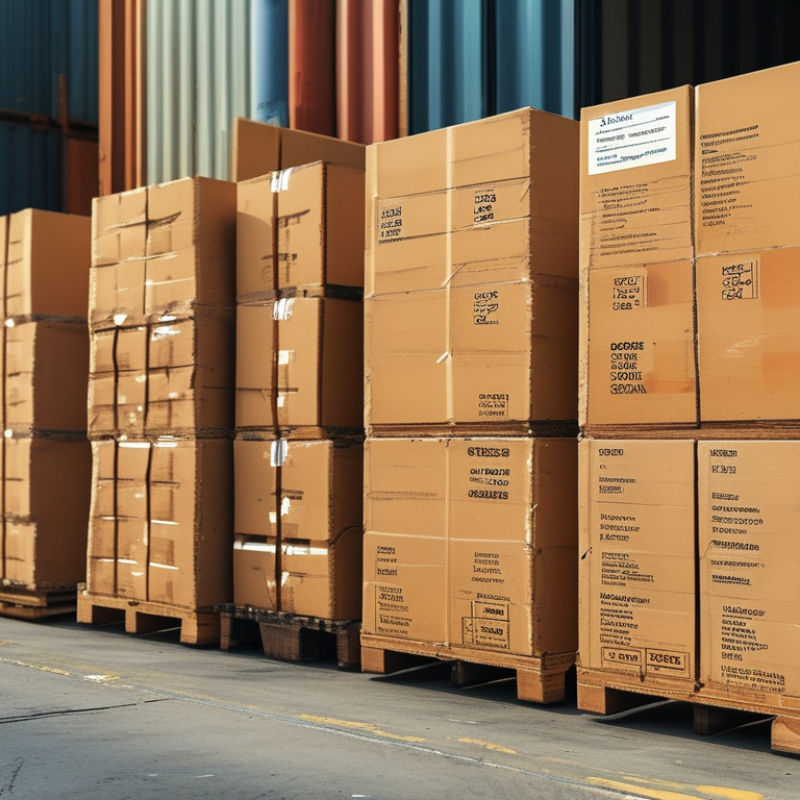
How to Ship a Single Pallet Internationally?
Define the shipment before requesting a freight quote. Measure the pallet after wrapping, not before. Record length, width, height, and total gross weight. Include the pallet itself. A 120 × 100 × 140 centimeter pallet can price differently from a 120 × 100 × 120 centimeter pallet. Carriers may also apply dimensional weight, especially for air freight. Photograph the packed pallet, scale display, labels, and visible condition. Small details prevent expensive disputes.
Describe the contents precisely. Avoid vague terms such as “parts” or “samples.” State the product name, quantity, material, value, country of origin, and applicable HS code. Confirm whether the goods need temperature control, extra bracing, or special handling. Include a commercial invoice and packing list that match the physical shipment. My practical check is simple: another person should understand the pallet without opening it. It sometimes exposes errors I missed.
Destination information must include the full delivery address, postal code, contact number, and receiving hours. Clarify whether delivery is to a business, residence, warehouse, or port. Confirm the agreed Incoterm and who handles import duties and clearance. The World Bank’s Logistics Performance Index 2023 highlights customs and shipment reliability as key logistics factors. UNCTAD’s Review of Maritime Transport 2024 reports that maritime shipping carries over 80% of global trade by volume. That scale does not make one pallet simple. A wrong dimension, incomplete address, or unclear product description can still delay it. Check twice.

Pallet footprints vary by destination. European shipments commonly use a 120 × 80 cm pallet, while North American shipments often use a 48 × 40 inch pallet, equivalent to approximately 121.9 × 101.6 cm. Confirm the accepted pallet dimensions, gross weight, cargo volume, and packaging requirements with the carrier before booking.
| Destination Region | Pallet Size | Planning Gross Weight | Example Contents |
|---|---|---|---|
| Europe | 120 × 80 cm | 450 kg | Cartons of packaged consumer goods |
| North America | 48 × 40 in / 121.9 × 101.6 cm | 500 kg | Boxed machine components |
| United Kingdom | 120 × 100 cm | 475 kg | Non-hazardous packaged equipment |
| Australia | 116.5 × 116.5 cm | 550 kg | Wrapped retail inventory |
How to Ship a Single Pallet Internationally?
A single pallet needs the same compliance discipline as a full container. Check the destination country’s import rules before booking transport. Confirm the importer of record, applicable duties, taxes, and required permits. The World Customs Organization reports that the Harmonized System covers more than 98% of global merchandise trade. Therefore, an accurate HS code is essential. A vague product description can trigger customs delays.
Review restricted-goods rules for the exact product, packaging, and route. Batteries, chemicals, food, medicines, and plant-based materials may require extra declarations or approvals. Rules can change by country and sometimes by state or province. Do not rely on an old shipment file. I still recheck this. A small error can be expensive.
Prepare a commercial invoice, detailed packing list, and transport document, such as a bill of lading or air waybill. Add a certificate of origin when the destination requires it. Include pallet count, dimensions, gross weight, net weight, package marks, declared value, currency, and delivery terms. The World Bank’s 2023 Logistics Performance Index shows customs performance differs widely between economies, so clearance timing is not uniform. Leave space for inspection. A clean document set helps, but it does not guarantee release. Confirm whether the carrier or customs broker will submit an import declaration. That responsibility is often misunderstood.
Shipping one pallet internationally requires more than finding the fastest route. Air freight suits urgent, lightweight cargo, but its price can rise sharply with dimensional weight. Ocean freight usually costs less for non-urgent shipments, although transit may take several weeks. Rail or road connections can work well for nearby regions. Air is faster. Ocean is often steadier for budgets.
Prepare one accurate shipment profile before requesting quotes. Include pallet dimensions, gross weight, pickup address, delivery address, cargo description, ready date, and desired service level. Ask each carrier for the same details: door-to-door price, transit estimate, customs handling, fuel charges, storage fees, insurance options, and delivery surcharges. A low headline rate may exclude terminal handling or residential delivery. Details matter.
Compare the final landed cost, not just the transport line. Check whether the quote includes export paperwork, import clearance, taxes, and unloading equipment. Confirm how the carrier handles damaged packaging or a missed delivery. Use a strong pallet, corner protection, stretch wrap, and clear labels. I have seen small measurement errors change a quote after pickup. That mistake is avoidable, but not always. Transit times are estimates, too. Weather, inspections, and port congestion can disrupt a perfect plan. Keep written confirmation of every charge and service promise before the pallet leaves.
Shipping one pallet overseas starts with preparation, not the collection deadline. Confirm the destination, delivery address, receiving hours, and import requirements before booking transport. Ask the recipient for a contact person who can answer customs questions. Describe every item accurately, including quantity, material, purpose, and country of origin. Keep the commercial invoice, packing list, and required permits consistent. Small errors can delay a pallet for days. I once saw a shipment held because the invoice used a product nickname instead of its formal description. That mistake was avoidable.
Choose a pallet in good condition, with no cracked boards, protruding nails, or water damage. Place heavy cartons at the bottom and distribute weight across the surface. Keep the center of gravity low. Add corner protection, cushioning, and moisture protection when needed. Leave no empty spaces where cartons can shift. Stack evenly, then apply stretch wrap from the pallet base upward. Banding can add stability, but excessive tension may crush cartons. Test by pushing the load gently. If it rocks, repack it.
Attach a clear shipping label on two sides, showing the destination, handling instructions, and shipment reference. Add weight and dimensions where required. Do not cover labels with loose film. Secure paperwork in a weather-resistant pouch, while keeping digital copies. Photograph the finished pallet from several angles. The images may reveal weak wrapping that a quick inspection misses. Check the final weight against the booking. Dense loads are easy to underestimate. Before handover, confirm the pallet can be moved safely and that every declaration is truthful and complete.
| Shipping Stage | Data Dimension | Recommended Specification or Typical Requirement | Practical Preparation and Verification |
|---|---|---|---|
| Prepare | Pallet footprint | Common footprints include 1,200 × 800 mm and 1,200 × 1,000 mm. Use a size accepted by the selected carrier and destination facility. | Measure the loaded pallet, including any overhang. Keep the load within the pallet edges whenever possible. |
| Prepare | Total shipment measurements | Record the final length, width, height, and gross weight after packing. Measurements must include the pallet, packaging, and securing materials. | Use calibrated scales and a tape measure. Round measurements only according to the carrier's booking rules. |
| Prepare | Weight distribution | Place the center of gravity as close as practical to the pallet center. Put heavier cartons at the bottom and lighter cartons above. | Do not create a top-heavy or uneven load. Check that the pallet remains stable when moved with handling equipment. |
| Prepare | Load-bearing limit | The allowable load depends on pallet material, deck design, support spacing, and whether the load is static, in motion, or stored in a rack. | Confirm the pallet rating with the supplier and compare it with the carrier's maximum shipment weight and dimension limits. |
| Pack | Outer packaging | Use export-suitable corrugated cartons, rigid crates, or other packaging appropriate for the product's weight, fragility, and moisture sensitivity. | Select packaging that can withstand repeated handling, stacking pressure, vibration, and changes in temperature and humidity. |
| Pack | Void space and cushioning | Minimize empty space inside cartons and use cushioning that prevents movement without crushing the product. | Perform a shake check: contents should not shift significantly when the closed carton is gently moved. |
| Pack | Stacking pattern | Keep cartons square and aligned. Interlocking layers can improve stability, while column stacking may provide better vertical compression strength for uniform cartons. | Avoid unsupported carton corners, leaning layers, and cartons extending beyond the pallet perimeter. |
| Pack | Moisture protection | Use a suitable pallet cover, stretch film, liner, or desiccant when the cargo is sensitive to moisture or may encounter condensation. | Do not seal wet goods inside the load. Use ventilation or moisture-control measures appropriate to the cargo. |
| Label | Shipping label information | Show shipper and consignee details, destination country, shipment or booking reference, package count, and the pallet's unique identification. | Place labels on two adjacent vertical sides where they remain visible after wrapping. |
| Label | Handling marks | Use clear marks such as “This Way Up,” “Fragile,” “Keep Dry,” or “Do Not Stack” only when they accurately describe the handling requirement. | Apply handling symbols where they can be seen by warehouse and transport personnel. Do not rely on labels as a substitute for secure packaging. |
| Label | Dangerous goods information | Regulated dangerous goods may require classification, packaging instructions, marks, labels, documentation, and trained personnel under applicable transport regulations. | Identify batteries, chemicals, aerosols, gases, and other regulated articles before booking. Obtain a safety data sheet when applicable. |
| Label | Country-of-origin marking | Country-of-origin marking and import documentation requirements vary by destination and product type. | Check the destination customs authority's rules and ensure the commercial invoice, packing list, and physical markings are consistent. |
| Secure | Stretch wrapping | Apply multiple overlapping layers around the load and pallet, with additional reinforcement at the top and bottom where needed. | Wrap tightly enough to unitize the cartons without deforming or damaging them. Secure the film to the pallet rather than only to the cartons. |
| Secure | Strapping | Use appropriate plastic or metal straps based on load weight, carton strength, and handling conditions. Add corner protectors beneath straps when needed. | Use at least two strap directions for unstable or heavy loads, and tension straps evenly to prevent crushing or shifting. |
| Secure | Edge protection | Use corner boards or edge protectors to distribute strap pressure and protect cartons from abrasion. | Ensure protectors extend along the vulnerable vertical edges and remain in position during wrapping and strapping. |
| Secure | Pallet attachment | The load must be connected to the pallet so it moves as one unit during lifting, braking, vibration, and transfer between vehicles. | Use strapping, stretch film, anti-slip materials, or blocking and bracing appropriate to the load; never depend solely on gravity. |
| Compliance | Wood packaging treatment | Solid-wood pallets, crates, and dunnage used in international trade commonly need to comply with ISPM 15 requirements, including approved treatment and an official mark. | Use compliant marked wood packaging and retain supplier documentation. Requirements may differ for processed wood products and specific destinations. |
| Compliance | Customs documentation | Typical documents may include a commercial invoice, packing list, transport document, and any required certificate, permit, or origin document. | Match the description, quantity, value, weight, country of origin, and tariff classification across all documents. |
| Verify | Final inspection | A shipment-ready pallet should be stable, dry, fully wrapped or strapped, correctly labeled, and free of visible damage or protruding materials. | Photograph all sides, record final dimensions and weight, and inspect the pallet again before handover to the carrier. |
| Verify | Carrier acceptance | Acceptance depends on the route, transport mode, commodity, dimensions, weight, destination, and applicable surcharges or restrictions. | Obtain written confirmation of the booking requirements before dispatch, especially for oversized, fragile, perishable, or regulated cargo. |
How to Ship a Single Pallet Internationally?
Shipping one pallet internationally starts with accurate pickup details. Measure the pallet after wrapping it, not before. Record its length, width, height, weight, packaging type, and number of cartons. A small error can change the freight class or trigger a collection delay. It happens.
Book pickup with a carrier experienced in palletized international freight. Provide the collection address, contact person, loading hours, and any vehicle access limits. Keep the pallet stable, labeled clearly, and protected from moisture. Before collection, photograph each side and retain the booking confirmation. I have found that missing photos make damage discussions harder. The process is not always smooth, especially when a warehouse changes its opening time without notice.
Customs clearance depends on complete, consistent documents. Prepare a commercial invoice, packing list, accurate product description, declared value, origin details, and required transport documents. Never use vague descriptions such as “parts” or “samples.” Check current import rules with the destination authority or a qualified customs professional. Track the shipment through pickup, export processing, border arrival, inspection, and final-mile delivery. Tracking can pause during customs review, so contact the carrier when an update exceeds the stated processing window. At delivery, confirm the pallet count, inspect visible damage, and record the receiver’s name, date, and signature. If something looks wrong, note it before signing. A clean delivery record matters.