Why Choose the Right Mould Bucket for Your Business Needs?
In today's competitive manufacturing landscape, the choice of equipment can significantly impact productivity. Mould buckets, a vital component in many industrial processes, often influence operational efficiency. According to a recent report by Market Research Future, the global market for moulding equipment is projected to grow steadily, underscoring the need for businesses to select the right tools.
Selecting the right mould bucket involves understanding specific business requirements. For instance, the volume of materials handled and the type of moulding process can affect the choice. A mismatch can lead to inefficiencies. The right mould bucket enhances consistency and reduces waste during production, which can save costs and increase profit margins. However, many businesses overlook this aspect, leading to potential setbacks.
It's also essential to reflect on the long-term implications of this choice. Investing in high-quality mould buckets may initially appear costly, but the returns in efficiency can be substantial. A reliable mould bucket can lead to fewer breakdowns and better product quality in the long run. Thus, the right choice is not just a short-term decision; it is crucial for sustainable growth.

Understanding the Importance of Mould Buckets in Business Operations
Mould buckets play a critical role in business operations. Choosing the right mould bucket can significantly impact efficiency. Improper choices often lead to production delays and increased costs. It is vital to align the bucket’s specifications with operational requirements. For instance, different materials and designs cater to various business needs. An unsuitable bucket may compromise quality control.
Understanding the importance of mould buckets requires insight into their functions. These buckets are not just containers; they play a part in the production cycle. They help in mixing, transporting, and storing materials efficiently. The right choice can enhance workflow and reduce labor strain. On the other hand, choosing poorly can lead to frequent maintenance issues.
Business owners must weigh their options carefully. Size, capacity, and durability are essential factors to assess. Reflecting on past experiences with mould buckets can provide valuable lessons. Gathering feedback from team members who use these tools daily can help refine choices. Ultimately, investing time in selecting the right mould bucket can pay significant dividends in productivity and effectiveness.
Factors to Consider When Choosing a Mould Bucket for Your Needs
Choosing the right mould bucket for business needs involves several critical factors. First, assess the bucket's capacity. Industry reports indicate that the right size can increase operational efficiency by up to 30%. A bucket that is too small will require more frequent emptying, while one that is too large may lead to unnecessary weight and wastage.
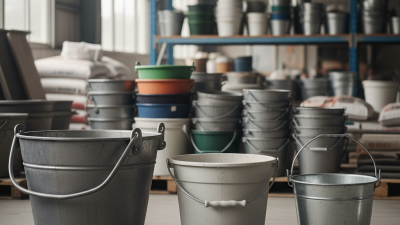
Next, consider the material composition. Heavy-duty steel buckets provide durability, but they add weight. Conversely, lightweight plastic options are easier to handle. However, plastic buckets are often less durable, which could lead to increased replacement costs. Up to 20% of businesses report frequent reinvestment in mould buckets due to choosing the wrong material.
Additionally, think about the design features. Bucket shapes can affect the flow of materials, potentially clogging up your operations. A well-designed bucket can optimize the mixing process, enhancing product quality. Yet, many users overlook ergonomic designs. A poorly designed handle can cause strain over time, reflecting a gap in user awareness.
User feedback suggests that selecting mould buckets based solely on initial cost can lead to long-term issues. Businesses might save money upfront but waste resources on inefficiency and replacements. This highlights the importance of integrating operational needs with effective design and material choice. Evaluate all factors carefully.
Types of Mould Buckets and Their Specific Applications
Choosing the right mould bucket is critical for various industries. Different applications require specific types of mould buckets. Understanding these can enhance efficiency and productivity in operations.
Concrete mould buckets, for example, are designed for pouring concrete efficiently. They come in different sizes, catering to diverse project scales. A report from the Concrete Institute indicates that using the right bucket can reduce waste by up to 15%. This reduction not only saves materials but also time in the pouring process.
On the other hand, metal mould buckets are highly durable. These are ideal for jobs demanding heavy-duty strength. However, they may lead to higher initial costs. A study from Manufacturing Insights notes that while metal buckets last longer, their performance depends on regular maintenance. Neglecting this can lead to unexpected breakdowns, affecting project timelines. Each mould bucket type has unique strengths and limitations, prompting careful selection based on project needs.
Why Choose the Right Mould Bucket for Your Business Needs? - Types of Mould Buckets and Their Specific Applications
| Mould Bucket Type |
Material |
Capacity (Liters) |
Specific Applications |
Advantages |
| Plastic Mould Bucket |
Polyethylene |
20 |
Food production, chemical handling |
Lightweight, cost-effective |
| Steel Mould Bucket |
Carbon Steel |
50 |
Construction, heavy materials |
Durable, resistant to high pressures |
| Aluminum Mould Bucket |
Aluminum Alloy |
30 |
Artisanal work, lightweight jobs |
Corrosion-resistant, good thermal conductivity |
| Fiberglass Mould Bucket |
Fiberglass Reinforced Plastic |
15 |
Chemical mixing, durable solutions |
Highly durable, heat resistant |
| Concrete Mould Bucket |
Reinforced Concrete |
100 |
Construction, large volume tasks |
Suitable for heavy loads, long-lasting |
Evaluating Material and Design for Durability and Efficiency
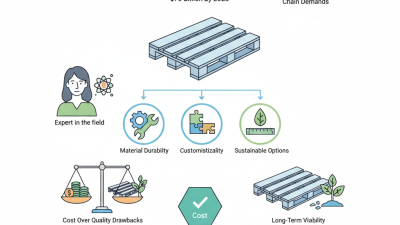
When selecting the right mould bucket, material and design play crucial roles. Durable materials like reinforced plastics or high-grade steel ensure longevity. These can withstand heavy-duty use and harsh environments. Design aspects, such as shape and capacity, impact efficiency. A well-designed bucket minimizes spillage and improves operation speed.
It’s vital to assess the specific needs of your business. Some projects may require larger capacities, while others demand lightweight options for ease of handling. This decision can affect productivity. Additionally, poorly designed buckets can lead to increased downtime due to wear and tear. Regularly review your equipment to avoid costly mistakes.
In practice, many businesses overlook the importance of compatibility with existing machinery. An incompatible bucket can cause operational delays and inefficiencies. Reflecting on past experiences can inform better choices. Striving for improvement in equipment selection ultimately leads to better outcomes for your operations.
Material Durability and Efficiency of Mould Buckets
Cost-Benefit Analysis: Investing in the Right Mould Bucket
Choosing the right mould bucket for your business can significantly impact your operational efficiency. A detailed cost-benefit analysis reveals that investing in high-quality mould buckets tends to save money in the long run. According to industry studies, businesses that opt for superior mould equipment report up to a 30% decrease in maintenance costs. This reflects not only durability but also functionality and efficiency.
Utilizing a premium mould bucket may seem costly upfront. Yet, the return on investment (ROI) can be substantial. Data shows that companies using durable mould buckets experience fewer breakdowns, leading to 20% increased productivity. This efficiency directly translates into improved profit margins. Regularly replacing lower-quality moulds can erode profits and slow down production.
Furthermore, a noteworthy factor is the learning curve for staff. High-quality equipment generally enhances user experience, diminishing training time. On average, businesses report a 15% reduction in onboarding times with better equipment. Yet, it’s essential to analyze individual business needs. The wrong choice can lead to inefficiencies. Not every mould bucket suits every application, which may prompt reconsideration of your choice. Engaging with industry experts helps ensure that the selected mould bucket truly aligns with operational goals.