China Top 10 Plastic Crate Mold Manufacturers You Should Know?
In the evolving landscape of packaging solutions, the importance of Plastic Crate Molds cannot be overstated. James Huang, a leading expert in the plastic manufacturing industry, once stated, "The right mold can make or break a product's success." As businesses strive for efficiency and quality, selecting a top-notch manufacturer becomes critical.
China has emerged as a powerhouse in the production of Plastic Crate Molds. The market is competitive, with numerous manufacturers vying for recognition. Each company brings unique strengths to the table. Yet, not all can deliver the same level of precision and durability.
The complexities of the Plastic Crate Mold sector require buyers to conduct thorough research. It's essential to understand the specifications, materials, and production capabilities of potential partners. Some manufacturers may excel in one area but fall short in another. Reflecting on past choices helps businesses refine their selection process. These considerations are vital to ensure both product quality and long-term success.
Top 10 Plastic Crate Mold Manufacturers in China: An Overview
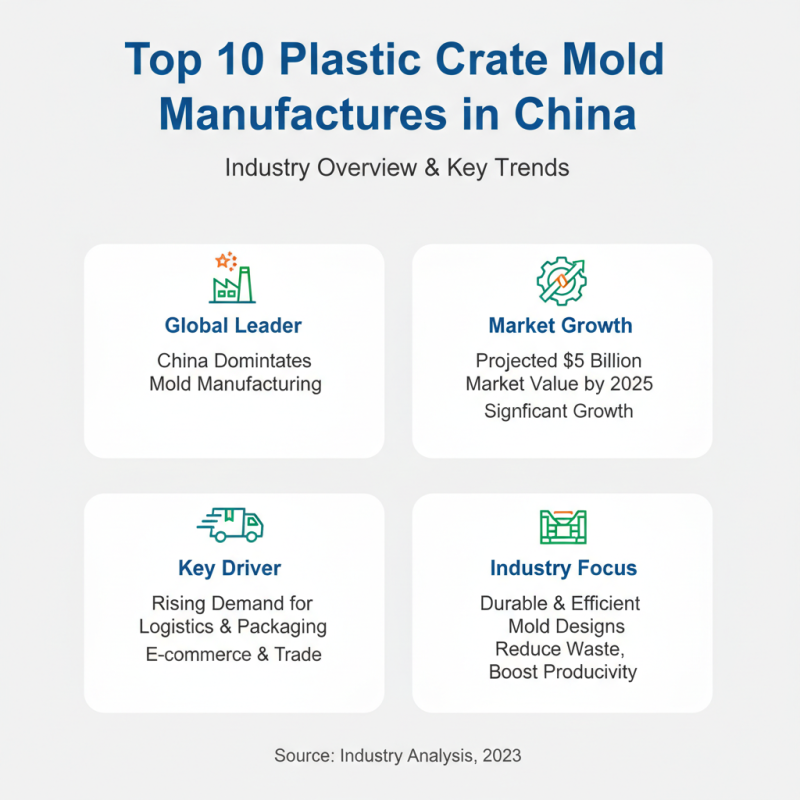
China stands as a leader in plastic crate mold manufacturing. The industry has seen significant growth, with a projected increase in market value to approximately $5 billion by 2025. This growth is largely driven by the rising demand for logistics and packaging solutions. Companies are consistently seeking durable and efficient mold designs to reduce waste and enhance productivity.
Mold manufacturers in China leverage advanced technology and skilled labor. They focus on precision in mold-making, ensuring high-quality production. Reports indicate that nearly 70% of plastic crates produced globally utilize Chinese molds. However, quality control remains a critical concern, as inconsistencies can impact production efficiency and product longevity. This presents an opportunity for manufacturers to improve their processes and adhere to international standards.
Furthermore, the competitive nature of the market pushes manufacturers to innovate. Recent trends show increasing interest in eco-friendly materials and sustainable practices. Adopting these practices can lead to better product acceptance in global markets. Yet, some companies still rely heavily on traditional methods, which may hinder their adaptability. Balancing innovation with quality assurance is vital in this evolving landscape.
Industry Standards and Innovations in Plastic Crate Mold Technology
The plastic crate mold industry has seen significant innovations recently. New materials and techniques are shaping manufacturing. According to a 2022 market report, the global plastic mold market is projected to reach $2 billion by 2027, fueled by demand for durable and versatile products.
In this evolving landscape, sustainability is essential. Companies are exploring biodegradable plastics and incorporating recycled materials. A recent study highlighted that 40% of consumers prefer products made from sustainable sources. This trend is pushing manufacturers to adapt to changing market preferences while maintaining product quality.
Challenges persist in this industry. Some manufacturers struggle with the high costs of advanced technologies. Additionally, ensuring consistency in mold production remains a critical issue. Variations in material quality can lead to defects, impacting overall efficiency. As firms navigate these hurdles, collaboration and knowledge sharing become more important.
Market Share Analysis of Leading Plastic Crate Mold Manufacturers
In the competitive landscape of plastic crate mold manufacturing, market share plays a crucial role in understanding industry dynamics. Many manufacturers have carved out significant niches, but fragmentation is evident. This suggests both opportunities and potential challenges. Some companies dominate certain regions, while others focus on specialized products.
An analysis of market share reveals varying levels of expertise among manufacturers. Some excel in innovative designs, while others may rely on traditional methods. This disparity creates a mixed bag of reliability and quality in the products offered. Customers often find themselves faced with options that appeal in different ways. However, the inconsistency can be a source of frustration.
Investing in research and development can yield growth. Yet, not all companies prioritize these initiatives. The tension between maintaining cost-efficiency and enhancing product quality remains palpable. Emerging manufacturers often grapple with this balance, leading to varying outcomes in consumer satisfaction. As competition intensifies, this is a critical area for reflection.
Key Factors Influencing the Selection of Plastic Crate Mold Suppliers
When selecting a plastic crate mold supplier, several key factors come into play. Quality is paramount. A reliable supplier should demonstrate expertise in producing molds that can withstand high levels of stress and production cycles. Testing and inspections of materials often indicate a supplier's commitment to quality.
Moreover, technological capability is crucial. Advanced machinery and design software enhance the precision of molds. Suppliers should utilize the latest technologies to improve efficiency and accuracy. Customization options also matter, as different industries have unique needs. Suppliers that offer tailored solutions can better meet specific requirements.
Additionally, communication plays a vital role. Clear and timely communication fosters a stronger partnership. Suppliers must be open to feedback and willing to address concerns promptly. Cost-effectiveness is another consideration. While affordability is important, it should not compromise quality. Finding a balance between price and quality can be challenging but necessary. These factors collectively shape the decision-making process when choosing a plastic crate mold manufacturer.
Plastic Crate Mold Manufacturers Performance Overview
Future Trends in China’s Plastic Crate Mold Manufacturing Industry
The plastic crate mold manufacturing industry in China is evolving rapidly. With advancements in technology, manufacturers are focusing on automation and precision engineering. This shift leads to higher efficiency and reduced production costs. However, some manufacturers struggle to keep up with these changes. Investing in new technologies is not always easy for smaller companies.
Sustainability is another key trend. There is a growing demand for eco-friendly materials in crate production. Many manufacturers are exploring biodegradable and recyclable options. Yet, the transition can be challenging. Balancing cost and environmental responsibility requires thoughtful planning. Additionally, market competition pushes some manufacturers to prioritize price over sustainability, which raises concerns.
Lastly, quality control remains an ongoing challenge. While many manufacturers adhere to strict standards, inconsistency in material quality can affect the final product. Continuous training and updated machinery are necessary to address this issue. As the industry matures, it must find ways to enhance quality while maintaining competitiveness. The future landscape is bright but filled with complexities that require careful navigation.