Top Pallet Mould Trends at the 2026 Canton Fair Insights?
As we approach the 2026 Canton Fair, the focus on Pallet Mould technology is becoming increasingly prominent. The global pallet market is anticipated to exceed USD 60 billion by 2024, driven by the rising demand for effective logistics solutions. Pallet Mould plays a crucial role in enhancing the efficiency and durability of pallets used across various industries.
Recent industry reports underscore the growing need for sustainable materials in pallet production. Companies are now prioritizing eco-friendly alternatives to reduce their carbon footprint. This trend is supported by the introduction of AI technology at the Canton Fair, which streamlines the search for suppliers that meet specific certifications. Buyers can quickly identify manufacturers of advanced pallet moulds that comply with ISO and CE standards.
However, challenges persist. Not all suppliers are equipped to meet the evolving demands for innovation. Some manufacturers lag in adopting new technologies, impacting their competitiveness. The opportunity lies in the integration of smart solutions within Pallet Mould production. This integration can significantly enhance operational efficiencies and customer satisfaction, making it a key focus area at the fair.

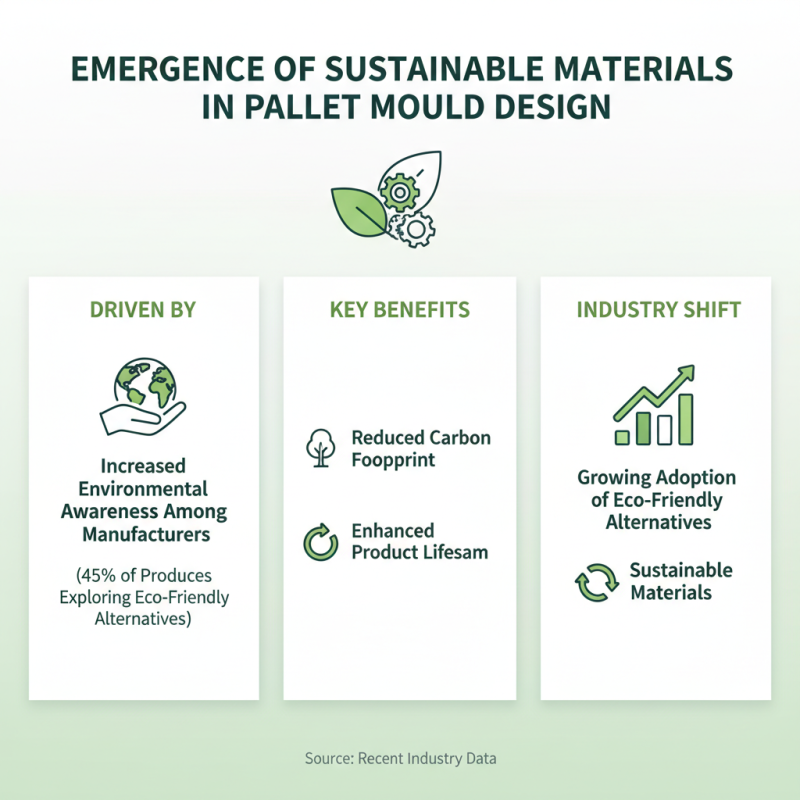
Emergence of Sustainable Materials in Pallet Mould Design
Sustainable materials are enjoying rising popularity in pallet mould design. This shift is driven by increased environmental awareness among manufacturers. According to recent industry data, more than 45% of producers are exploring eco-friendly alternatives. These materials not only reduce carbon footprints but also enhance product lifespan.
Recycled plastics, bio-based composites, and wood-plastic hybrids are leading the charge. They offer similar durability as traditional materials while being less harmful to the environment. For instance, studies show that using recycled plastics can cut greenhouse emissions by up to 30%. However, challenges remain. Some eco-friendly materials may lack structural integrity compared to their conventional counterparts.
Tips: Consider the longevity of sustainable materials when selecting designs. Always look for certifications that confirm their eco-friendly claims. Experiment with combinations of different materials to find the most effective solutions for your needs. The evolution of pallet moulds is ongoing, and learning from early mistakes can lead to better designs.
Innovative Technologies Shaping Pallet Production Processes
At the 2026 Canton Fair, innovations in pallet production processes took center stage. One major trend is the use of automation. Automated systems increase efficiency and reduce labor costs. Robotics are transforming how pallets are assembled and packed. These machines handle heavy loads with precision.
Another exciting development is the shift towards sustainable materials. Many manufacturers are exploring bio-based plastics and recycled wood. These materials lower environmental impact and promote sustainability. However, the challenge lies in ensuring durability and cost-effectiveness. Companies struggle to find the right balance.
Advanced technologies like AI and IoT are making waves too. Smart sensors track production metrics in real-time. This data can identify bottlenecks and improve workflows. Yet, the reliance on technology can be daunting. Integrating new systems with legacy infrastructure often proves difficult. Overall, these trends reflect a dynamic shift in the pallet industry.
Top Pallet Mould Trends at the 2026 Canton Fair Insights
| Trend |
Description |
Impact on Production |
Adoption Rate (%) |
| Automation Technology |
Integration of robotics for mold handling and pallet assembly. |
Increases speed and efficiency of production lines. |
70 |
| Eco-friendly Materials |
Shift towards biodegradable and recycled materials for pallet production. |
Reduces environmental footprint and attracts eco-conscious customers. |
65 |
| Advanced Mould Design |
Use of CAD and 3D printing for precise mold fabrication. |
Enhances production accuracy and reduces waste. |
60 |
| Smart Monitoring Systems |
Implementation of IoT sensors for real-time monitoring of mold processes. |
Improves product quality and reduces downtime. |
55 |
| Customization Options |
Offering tailored solutions to meet specific customer requirements. |
Increases market competitiveness and customer satisfaction. |
75 |
Market Demands and Consumer Preferences Influencing Pallet Trends
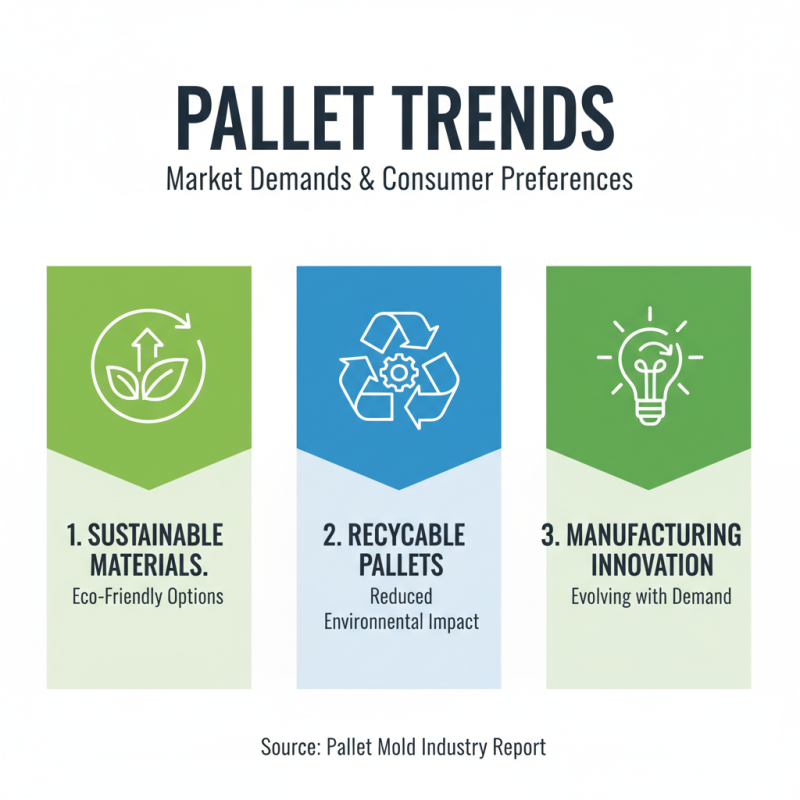
The pallet mould industry is rapidly evolving, shaped by market demands and shifting consumer preferences. Recent trends show a significant interest in sustainable materials. Many consumers are now prioritizing eco-friendly options. This shift pushes manufacturers to innovate. The need for recyclable pallets is rising, reflecting a broader awareness of environmental impact.
Customization is another critical factor. More businesses want pallets tailored to their specific needs. This trend highlights the diversity of products in various sectors. Companies are seeking designs that optimize space and improve efficiency. However, meeting these diverse requirements is a challenge. Manufacturers face pressure to balance quality and cost while catering to unique demands.
Consumer preferences also influence aesthetics and functionality. Sleek designs with added features are gaining traction. Many expect pallets that are not only durable but visually appealing. Finding the right balance between appearance and utility is crucial. The industry must adapt quickly to these preferences. As trends evolve, the focus should remain on innovation and adaptability. Continuous improvement is key, but it is essential to reflect on current practices.
Analysis of Competitive Landscape in Pallet Mould Manufacturing
The pallet mould manufacturing sector is witnessing a dynamic shift. Analyzing the competitive landscape reveals key trends shaping this industry. Many companies are investing heavily in automation and technology. This move enhances efficiency and reduces production times. However, not all businesses adapt quickly. Some stick to traditional methods, risking obsolescence.
Sustainability is also a pressing concern. Many manufacturers are adopting eco-friendly materials in their mould designs. This aligns with global green initiatives, appealing to environmentally-conscious consumers. Yet, some firms struggle to balance cost and sustainability. This leads to challenges in maintaining profit margins.
The market is saturated with various players, each vying for innovation. Companies are collaborating more frequently, embracing open-source ideas. This fosters creativity, but it can also dilute brand identity. The competitive landscape is a complex web. Understanding these trends is crucial for survival in this evolving field.
Top Pallet Mould Trends at the 2026 Canton Fair Insights
Future Projections for Pallet Mould Advancements post-2026 Canton Fair
As the 2026 Canton Fair approaches, the pallet mould industry is expected to undergo significant transformations. Innovations in materials will likely dominate. Lightweight yet durable composites may replace traditional materials. This shift could enhance efficiency in production processes, leading to reduced manufacturing costs. Sustainability will also be a key focus. Eco-friendly moulds may emerge as manufacturers seek to minimize their environmental footprint.
Post-2026, advancements in technology may redefine pallet mould design. Automation and smart technology could streamline production. Robotics may play a crucial role, improving precision and reducing human error. However, these changes require reflection on workforce impacts. How will employees adapt to a more automated landscape? Training programs will need to evolve accordingly.
The future of pallet moulds will likely involve collaboration. Partnerships between manufacturers and tech firms may become more common. This could drive innovation but also create challenges. Balancing cutting-edge solutions with practical application will be essential. Companies must remain agile, ready to adapt as new trends emerge from the Canton Fair.