How to Choose the Best Welding Pallet for Your Project Needs?
In the fabrication industry, the selection of the appropriate Welding Pallet significantly influences project success. According to a report by the American Welding Society, 45% of welding defects arise from improper setup and equipment choices. This highlights the importance of understanding your project needs before making a decision.
Expert John Carter, a seasoned welding engineer, emphasizes, “Choosing the right Welding Pallet can make or break your project.” He points out that various factors, like material compatibility and load capacity, should be carefully considered. Many overlook these details, resulting in costly downtime.
Welding Pallets come in various designs, each tailored for specific applications. Without proper research, you might end up with a product that does not meet your requirements. This can lead to inefficient operations and reduced safety. Reflecting on your choices and learning from past experiences is crucial in this competitive field.

Understanding the Different Types of Welding Pallets Available in the Market
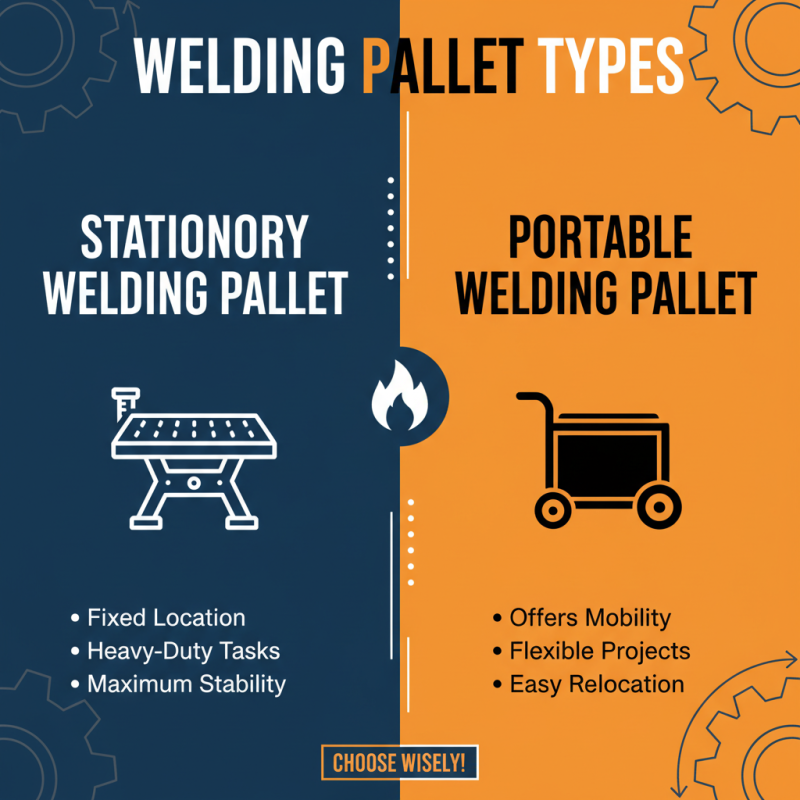
When selecting a welding pallet, knowing the types available is crucial. There are primarily two categories: stationary and portable pallets. Stationary pallets are designed for heavy-duty tasks. They remain fixed in one location, providing stability. On the other hand, portable pallets offer mobility and flexibility. They are ideal for projects requiring movement across different working areas.
The material of the pallet also plays a significant role. Steel pallets are robust and long-lasting. They can handle intense welding tasks. However, aluminum pallets are lighter and easier to transport. They may not be suitable for extremely heavy applications. Each type has its pros and cons. It’s important to think about your specific project needs.
Consider the size and weight capacity carefully. A pallet that is too small may limit your work. Conversely, an excessively large pallet can be unwieldy. Evaluate the environment where you will use the pallet as well. Welders often face unique challenges in various settings. The right welding pallet can significantly enhance efficiency. Make sure to reflect on these factors before making a decision.
Key Factors to Consider When Selecting a Welding Pallet for Your Project
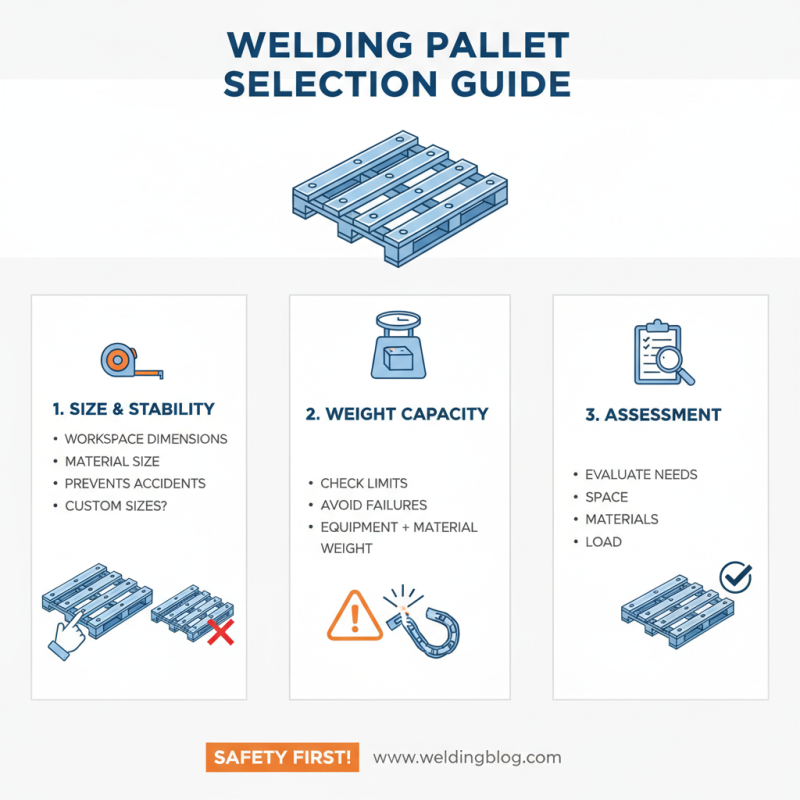
When selecting a welding pallet, consider its size and capacity. A pallet too small may lead to instability. It’s essential to assess both the dimensions of your workspace and the materials you will use. Proper sizing prevents accidents. Sometimes, custom sizes may be necessary. Don’t overlook the weight limitations of the pallet. Exceeding these limits can cause structural failures.
Next, think about the pallet's material. Different materials offer varying levels of durability and heat resistance. Steel is robust but can be heavy. Aluminum, on the other hand, is lightweight but may not support heavier loads as well. Evaluate your project’s specific requirements. Sometimes, the best choice is a combination of materials. Look for pallets that balance strength and weight.
Lastly, consider the pallet’s design. If it has features like adjustable legs or integrated clamps, it can provide extra stability. Assess how easy it is to use. Complicated designs can lead to mistakes. Do thorough research on all available options. A poor choice now may lead to future frustrations. Don’t rush this decision. Take time to reflect on what you truly need.
Assessing Material Compatibility: Ensuring Optimal Performance with Welding Pallets
When choosing a welding pallet, material compatibility is crucial. Different materials can affect the overall performance of your welding process. According to the American Welding Society, incompatible materials can lead to failures during the weld. This is particularly true with variations in thermal expansion and contraction rates. These discrepancies can create stress points, leading to cracks or weak joints.
In practice, steel and aluminum do not always bond well together. For projects requiring a mix, consider using special alloys or fillers designed to enhance compatibility. A report from the International Institute of Welding highlights that around 30% of welding failures are due to material mismatches. This statistic reinforces the need for careful assessment of material properties before initiation.
Choosing a welding pallet that aligns with your project's specific material requirements can enhance longevity and reliability. Always consider factors like strength, ductility, and resistance to corrosion. Even with the right combination, problems can arise. Continuous testing and adjustment may be necessary as you finalize your setup. Being mindful of these aspects can lead to better outcomes in complex welding scenarios.
How to Choose the Best Welding Pallet for Your Project Needs? - Assessing Material Compatibility: Ensuring Optimal Performance with Welding Pallets
| Material Type |
Welding Process Compatibility |
Advantages |
Disadvantages |
| Mild Steel |
MIG, TIG, Stick |
Cost-effective, easy to weld |
Susceptible to rust |
| Stainless Steel |
MIG, TIG |
Corrosion resistant, strong |
Higher cost, requires more skill |
| Aluminum |
MIG, TIG |
Lightweight, good conductivity |
Difficult to weld due to warping |
| Copper |
TIG, Brazing |
Excellent conductivity, corrosion resistant |
High melting point, expensive |
| High Strength Steel |
MIG, TIG, Stick |
Durable, weldable |
Requires specialized techniques |
Analyzing Load Capacity and Stability Requirements for Welding Pallets
Choosing the right welding pallet significantly impacts project success. Analyzing load capacity is crucial. According to industry standards, pallets must support at least 1,500 pounds for heavy-duty tasks. However, many welders overlook the potential for exceeding these limits. This can result in accidents or material failure.
Stability is another critical factor. A pallet that shifts under pressure can cause dangerous situations. Reports indicate that 30% of welding failures are linked to inadequate pallet stability. Opt for pallets with a low center of gravity. This design enhances stability. If your project involves uneven surfaces, consider adjustable feet or supports.
While meeting required capacities is vital, user error often goes unnoticed. A seemingly sturdy pallet may not align with work conditions. Understanding the specific needs of your project is essential. This includes considering the weight distribution of your materials. Balancing these factors can lead to better outcomes in your welding projects.
Welding Pallet Load Capacity and Stability Analysis
This chart presents the load capacity of different types of welding pallets, helping you choose the best option based on your project needs. The values range from light duty pallets suitable for lighter loads to extra heavy duty pallets capable of supporting significantly more weight.
Evaluating Cost vs. Quality: Making an Informed Investment in Welding Pallets
When selecting a welding pallet, evaluating cost versus quality is crucial. A high-quality pallet might cost more upfront, but it offers better durability. You need something that withstands the rigors of welding tasks. Lower-priced options may seem appealing, but they can wear out quickly. This could lead to higher replacement costs over time.
Tip: Always assess material and construction quality before purchasing. Look for pallets made from robust materials. Consider their load capacity as well, ensuring they can handle your specific project needs.
Ask yourself if you can compromise on quality for a cheaper option. Sometimes, saving a few bucks can lead to bigger expenses down the road. A poor-quality pallet can cause safety hazards as well. Investing in a reliable product ensures you can complete your projects effectively.
Tip: Check reviews from other users. Real experiences provide insight into performance and longevity. Don’t ignore feedback about poor experiences. This can guide you toward making a better investment in the long run.