How to Choose the Right Pallet Mould for Your Manufacturing Needs?
Choosing the right pallet mould is crucial for any manufacturing process. Expert John Smith, a recognized authority in the industry, once stated, "The right mould can increase efficiency and reduce costs significantly." This emphasizes the importance of making informed decisions when selecting a pallet mould.
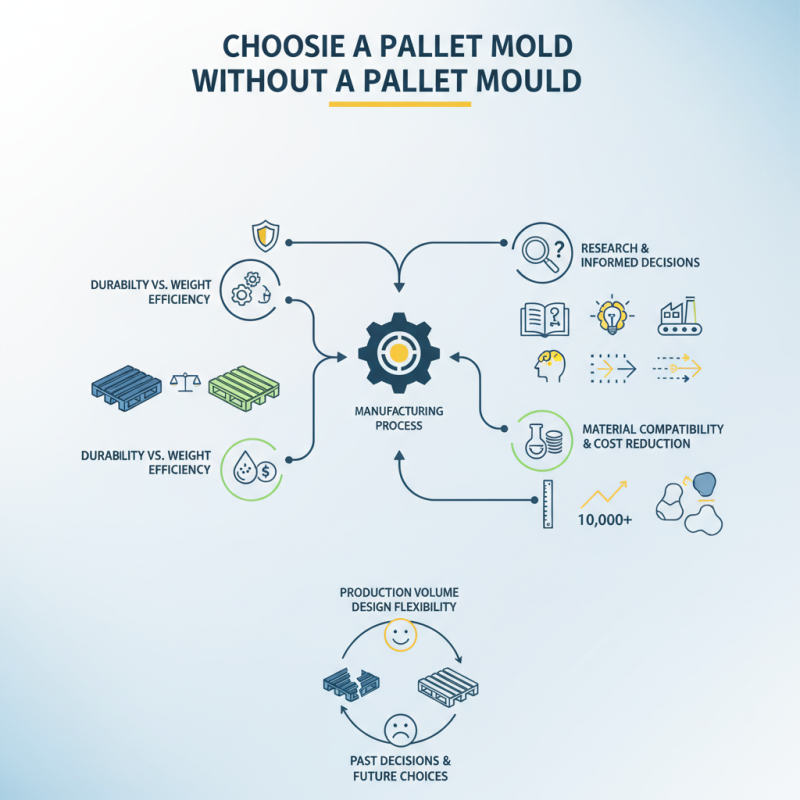
Different industries require various types of pallet moulds, tailored to specific needs. For example, some manufacturers focus on durability while others prioritize weight efficiency. Each choice has its pros and cons. With confusion about options available, selecting a mould can become overwhelming.
In a rapidly changing market, it's vital to invest time in research. Manufacturers must consider factors like material compatibility, production volume, and design flexibility. Every detail counts in ensuring seamless production. Reflecting on past decisions can reveal mistakes made, highlighting the importance of choosing wisely in the future.
Understanding the Basics of Pallet Moulds in Manufacturing
When selecting the right pallet mould, understanding the basics is crucial. Pallet moulds are essential tools in manufacturing, shaping materials into specific designs. These moulds can be made from various materials like steel or aluminum. The choice of material affects durability and cost. Steel may last longer but could be heavier and more expensive.
Manufacturers should consider the end product's size and weight. A larger pallet requires a robust mould that can withstand pressure during production. It's also important to evaluate the design complexity. Some pallets have intricate shapes, needing detailed moulds. A basic mould may work for simple designs, but it could fall short for more complex structures.
Not all moulds are created equal. Some may not provide the accuracy needed. This can lead to inconsistencies in the final product. Working with a mould that doesn't meet specific needs may result in wasted materials and time. Reflecting on these factors is essential for making an informed decision.
How to Choose the Right Pallet Mould for Your Manufacturing Needs?
| Pallet Mould Type |
Material Used |
Production Capacity |
Durability (cycles) |
Cost Estimation ($) |
| Single-use Pallet Mould |
Polyethylene |
500 units/week |
1 |
1500 |
| Reusable Pallet Mould |
Polypropylene |
300 units/week |
50 |
3500 |
| Heavy-duty Pallet Mould |
Steel |
100 units/week |
1000 |
7500 |
| Customizable Pallet Mould |
Aluminum |
200 units/week |
300 |
5000 |
Factors to Consider When Choosing Pallet Moulds
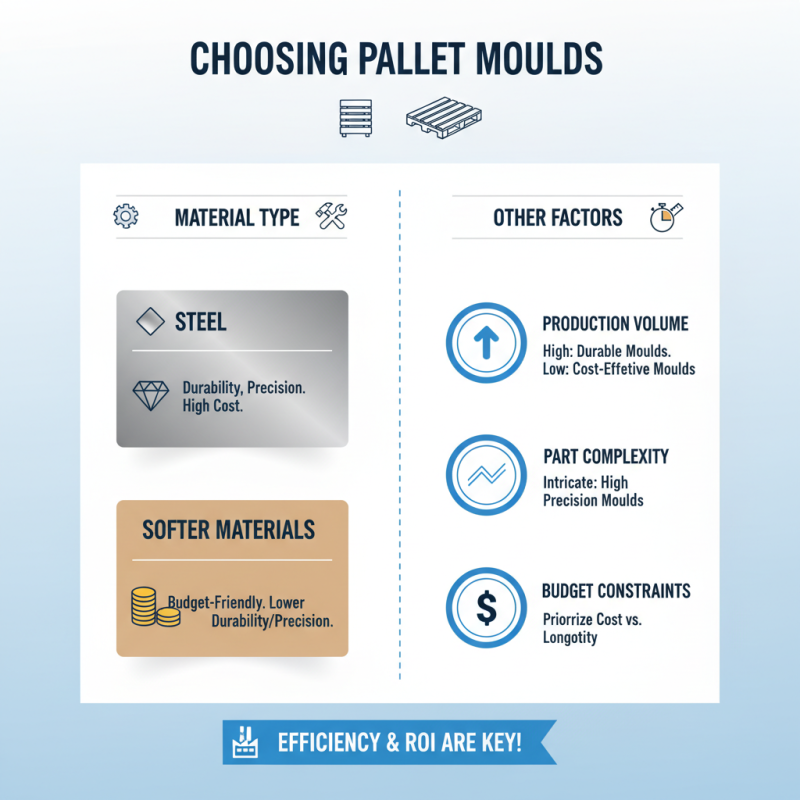
Choosing the right pallet mould is crucial for manufacturing efficiency. One major factor is the material you plan to use. Different mould materials will yield different levels of durability and precision. For instance, steel is known for its longevity. However, it may be too costly for some projects. If you're on a tight budget, consider softer materials, but weigh the trade-offs carefully.
Another important aspect is the design complexity of the mould. Complex designs may require advanced tooling, leading to higher costs and longer lead times. You might want to ask yourself if the design is necessary for your production goals. Sometimes simpler designs can still meet your needs effectively. Also, think about the volume you expect to produce. High-volume production often benefits from more robust and intricate moulds, while lower volumes might not justify the added expense.
Lastly, consider the maintenance needs of your chosen mould. Some moulds require a high level of maintenance, which could impact your production schedule. It's vital to reflect on your team's capability to manage these requirements. Balancing durability and maintenance with your production demands can be tricky. Take the time to analyze each factor. This ensures you select a mould that enhances your operational efficiency and aligns with your business objectives.
Types of Pallet Moulds and Their Applications
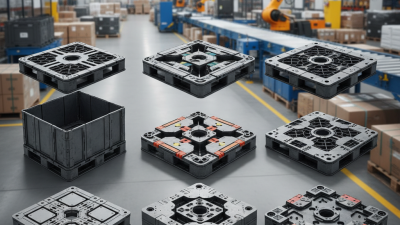
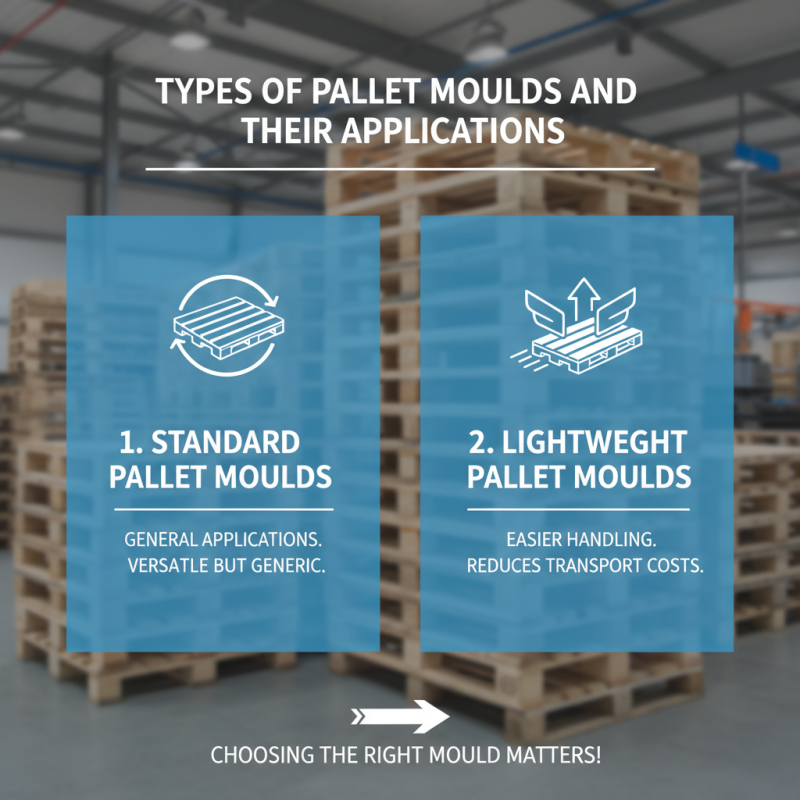
When selecting a pallet mould, understanding the types available is crucial. There are several designs, each serving distinct purposes. For example, standard pallet moulds are suitable for general applications. They are versatile but might not meet specific needs. Then, there are lightweight moulds designed for easier handling. These can be beneficial in reducing transportation costs.
Heavy-duty moulds, on the other hand, are built for durability. They are ideal for heavy-load situations. However, they may require a larger investment upfront. Another option is collapsible moulds. These offer efficient storage and transport. Their design allows for easy assembly, but they might lack the sturdiness of traditional types.
Choosing the right mould requires careful consideration of your production demands. Sometimes, trial and error is necessary. Reflect on past experiences to inform future decisions. It’s important to evaluate long-term costs as well. The perfect mould might not exist. Finding an acceptable compromise can lead to better productivity.
Evaluating Material Options for Durable Pallet Moulds
Choosing the right material for your pallet mould is vital. You want it to be durable, yet cost-effective. Common materials include steel, aluminum, and various plastics. Each one has unique characteristics affecting lifespan and performance.
Steel offers strength and longevity. It withstands heavy loads and repetitive use. However, it can be heavy and prone to rust without proper treatment. Aluminum is lighter and resistant to corrosion. It’s easier to handle but may not support as much weight. Plastics, while lighter and rust-proof, often lack the durability of metal options.
Reflect on your specific needs. Consider the environment where the pallets will be used.
Will they be exposed to moisture, heat, or chemicals? That might require specialized materials. Understand the trade-offs and choose wisely, as the wrong choice can lead to higher costs down the line.
The Importance of Manufacturer Reputation and Support
When selecting a pallet mould, the manufacturer's reputation plays a vital role. A study from the Manufacturing Institute indicates that 75% of successful manufacturers prioritize the reliability of their suppliers. When you partner with a reputable manufacturer, you're more likely to receive timely support and quality assurance. These aspects are critical in maintaining production efficiency.
Expert support offers advantages. It allows you to troubleshoot issues quickly and ensures your operation runs smoothly. According to a report by Grand View Research, companies with strong supplier relationships see a 20% decrease in downtime. This data highlights the importance of selecting a manufacturer who can provide not just a product, but also ongoing assistance.
Tips: Research to find reviews and ratings of manufacturers. Ask for references from their previous clients. Engage in discussions to gauge their responsiveness. Choose a supplier who is willing to offer training and advice. Short-term savings on moulds often lead to long-term losses if support is lacking. Being proactive can save you time and money in the long run.