Top Benefits of Using Plastic Trash Can Mold for Waste Management Solutions?
The use of Plastic Trash Can Mold has gained traction in modern waste management solutions. These molds offer numerous benefits that enhance efficiency and functionality. They contribute significantly to creating durable and eco-friendly trash receptacles that can withstand harsh environments.
In waste management, effective solutions are crucial. Plastic Trash Can Mold enables manufacturers to produce a variety of designs that meet different needs. For instance, they can create bins that are stackable for easy transportation. This aspect improves logistics while saving space in workshops. Moreover, customizing molds allows for producing bins with specific features, such as wheels and lids, improving user convenience.
Despite these advantages, some challenges exist. The initial costs of setting up production can be high. Additionally, finding a balance between quality and cost-effectiveness requires careful planning. Overall, using Plastic Trash Can Mold presents a pathway to innovative waste solutions while also prompting reflection on production methods and sustainability practices.
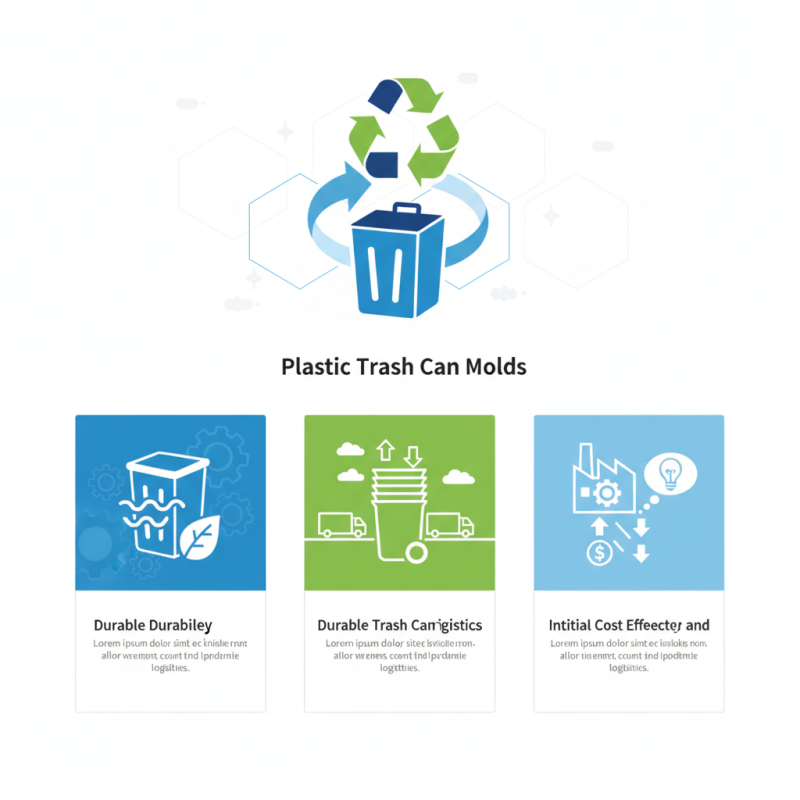
Benefits of Plastic Trash Can Molds in Waste Management Efficiency
Plastic trash can molds play a significant role in improving waste management efficiency. These molded containers are lightweight yet durable. They can withstand harsh weather and heavy loads without breaking. This longevity reduces waste from discarded trash cans, which is beneficial for the environment.
Using plastic molds also facilitates easy cleaning. Smooth surfaces prevent waste build-up and bacteria growth. However, improper maintenance can still lead to odor and contamination. Regular checks are essential. A little effort goes a long way in maintaining hygiene.
When choosing plastic trash cans, consider size and design. Ensure they fit your specific waste management needs. Additionally, observe how people use them. Are they properly disposed of? Often, educating users can enhance efficiency. Encourage responsible habits to maximize the benefits of these molds.
Top Benefits of Using Plastic Trash Can Mold for Waste Management Solutions
| Benefit |
Description |
Impact |
| Durability |
Plastic trash can molds are resistant to breakage and weather conditions. |
Increases lifespan and reduces replacement costs. |
| Lightweight |
Easier to transport and handle compared to metal counterparts. |
Enhances efficiency in waste collection. |
| Cost-Effective |
Lower production costs lead to savings in large-scale waste management. |
Optimizes budget allocation for waste management solutions. |
| Customization |
Plastic molds can be easily designed for specific needs and sizes. |
Improves functionality and usability in diverse environments. |
| Recyclable |
Many plastic materials used are recyclable and promote sustainability. |
Supports environmental sustainability efforts in waste management. |
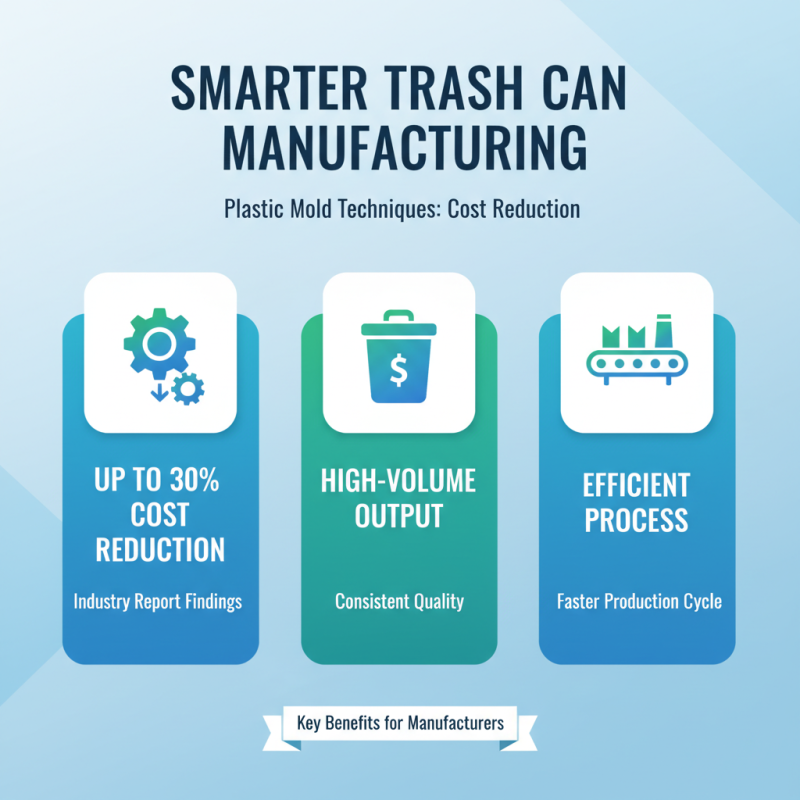
Reduction of Manufacturing Costs through Plastic Mold Techniques
The use of plastic mold techniques offers significant cost benefits for manufacturing trash cans. A recent industry report indicated that production costs could be reduced by up to 30% when switching to plastic molds. These methods allow for high-volume output with consistent quality, leading to a more efficient manufacturing process.
Plastic trash cans can be made in various shapes and sizes, catering to different waste management needs. This flexibility reduces excess material use, which also contributes to cost savings. Yet, some manufacturers struggle with the transition to plastic molds. Traditional methods may provide better familiarity but can be less efficient. Embracing new techniques often requires investment that not all are ready to make.
Moreover, the environmental aspect cannot be overlooked. A report from a waste management firm stated that about 25% of all trash canisters used globally are plastic-based. This raises concerns about sustainability. It’s crucial for manufacturers to balance cost savings with eco-friendly practices. Developing ways to create recyclable or biodegradable plastic molds could present future challenges and opportunities.
Durability and Longevity of Plastic Trash Cans in Waste Disposal
Plastic trash cans have gained popularity in waste disposal due to their exceptional durability and longevity. According to a report by the American Recycling Council, durable materials such as high-density polyethylene (HDPE) increase the lifespan of waste containers. These trash cans can withstand harsh weather conditions, preventing cracks and leaks. In fact, HDPE can last for over 20 years, which significantly reduces the frequency of replacements.
Moreover, the ability of plastic trash cans to resist corrosion and deterioration makes them more reliable than metal options. A study from the Waste Management Institute revealed that metal trash cans often succumb to rust, leading to premature disposal. This not only increases costs but also contributes to environmental waste. It is essential to consider how the durability of plastic can lead to more sustainable waste management practices.
However, the manufacturing process of plastic can have drawbacks. Though it offers longevity, the environmental impact during production is concerning. Some argue that the focus on durability neglects the need for recycling and responsible disposal of plastic materials. Striking a balance between durability and sustainability remains a challenge within the industry. It’s crucial to reflect on how we can enhance waste management solutions while minimizing environmental harm.
Environmental Impact: Recycling Potential of Plastic Trash Cans
Plastic trash cans have become a staple in waste management solutions. Their recycling potential is significant, but often overlooked. When disposed of properly, these containers can be transformed into new products. This reduces landfill waste and conserves resources.
However, not all plastic trash cans are created equal. Some are made from higher-quality materials that can be recycled more efficiently. The challenge lies in educating consumers about proper disposal and recycling practices. Many throw their trash cans away without considering the environment.
Recycling plastic trash cans can lead to new containers, construction materials, and more. This not only supports a circular economy, but it also saves energy. Yet, improper disposal still prevails. Communities need more awareness campaigns. If we don't change behaviors, the potential benefits of recycling remain unrealized.
Customization and Design Flexibility of Plastic Molded Waste Bins
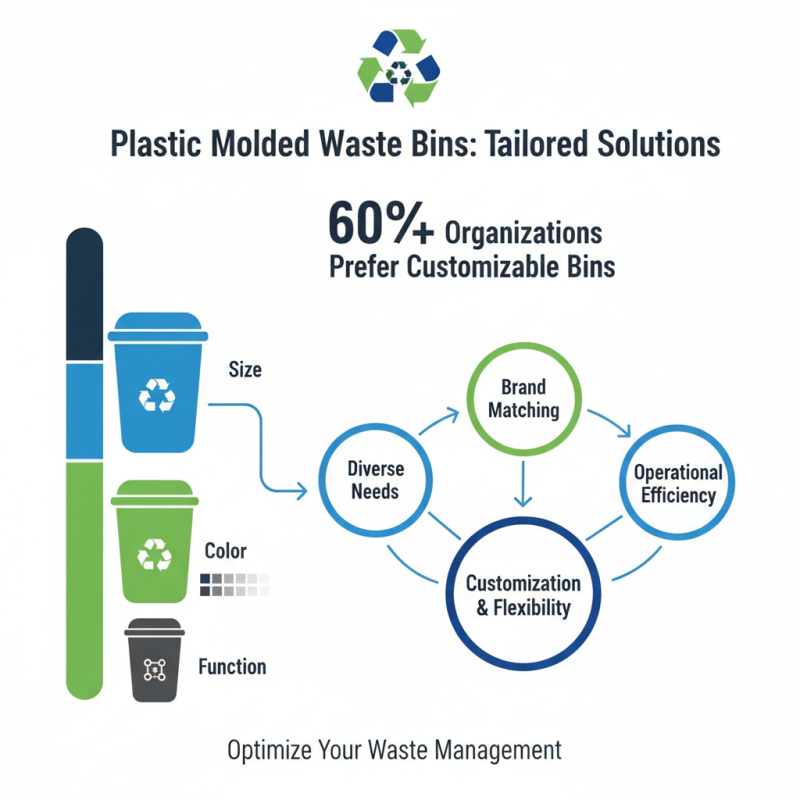
Plastic molded waste bins offer remarkable customization and design flexibility, making them ideal for diverse waste management needs. Industry reports indicate that over 60% of organizations prefer customizable waste solutions. This percentage highlights the growing trend toward tailored waste management systems. Businesses want bins that fit their specific requirements, including size, color, and function.
One significant advantage of plastic mold is the ability to modify designs easily. Companies can create bins that integrate seamlessly into their environments. For instance, healthcare facilities often require waste bins that prevent contamination and are easy to clean. In contrast, parks may need aesthetically pleasing bins that withstand the elements. The possibilities are virtually endless, yet not all manufacturers can deliver on these demands. Some options may lack durability or functionality, which requires careful consideration.
Moreover, sustainability plays a crucial role in design. According to a recent report, 50% of consumers prefer eco-friendly products. Designers must keep this in mind. They face the challenge of creating molds that reduce resource consumption while delivering quality. The balance between aesthetics and practicality will define future innovations in the industry. Meeting these expectations may not always be straightforward. It requires ongoing innovation and a commitment to sustainability.