inquiry
Leave Your Message

2026 Best Mould Bucket Types for Global Buyers?

Choosing the best Mould Bucket in 2026 requires more than comparing price, steel thickness, or advertised capacity. Global buyers face different soil conditions, machine standards, transport rules, and production expectations. A bucket designed for wet clay may perform poorly in abrasive rock. A lightweight model may reduce fuel use, yet deform under repeated impact. Details matter.

Industry data supports this careful approach. Grand View Research forecasts continued growth in the global construction equipment market through 2030, driven by infrastructure investment and equipment replacement. The International Energy Agency also reports rising attention to energy efficiency across heavy machinery and industrial operations. Meanwhile, Off-Highway Research highlights stronger demand for compact and versatile equipment in several regional markets. These trends increase interest in standard, digging, grading, skeleton, rock, tilt, and custom Mould Bucket types.

However, market reports rarely measure Mould Bucket performance as a separate category. That is an important limitation. Buyers should therefore combine published data with field evidence, manufacturer records, and machine-specific testing. Check cutting-edge wear, weld quality, pin dimensions, hydraulic compatibility, and rated working load. Ask for material certificates and inspection photographs. A polished catalogue cannot replace a site trial.

This guide compares the most practical Mould Bucket types for global buyers in 2026. It considers soil, application, excavator size, maintenance access, shipping weight, and total ownership cost. Regional preferences may differ. There is no universal winner. The right choice is the one that survives real work, not merely a convincing quotation.
2026 Best Mould Bucket Types for Global Buyers?

Mould Bucket Basics: Structure, Materials, and Manufacturing Principles

For global buyers, a moulded bucket begins with its load path. The rim carries stacking pressure, while the base absorbs impact from floors and pallets. A reinforced handle zone prevents cracking around the grip holes. Some designs use ribs under the base and along the sidewall. These ribs improve stiffness without adding excessive material. The bucket should stand evenly, even when slightly overfilled. That simple test often reveals weak geometry.

Material selection changes both performance and cost. Polypropylene offers low density, chemical resistance, and useful flexibility. High-density polyethylene provides toughness, especially under repeated handling. Recycled resin can reduce environmental impact, but its colour, odour, and impact strength may vary. PlasticsEurope reported global plastics production of about 400.3 million tonnes in 2022. That figure shows the scale of material demand, not proof that every recycled grade suits food or industrial use. Buyers should request resin specifications and batch testing.

Manufacturing usually follows injection moulding. Heated resin enters a steel cavity, cools against the mould wall, and ejects through a controlled mechanism. Cooling channels matter. Uneven cooling can cause warpage, sink marks, or a tilted base. Wall thickness should remain reasonably uniform. Sharp internal corners need generous radii. They trap stress. Dimensional checks should include rim diameter, handle alignment, base flatness, and volume. A 2024 technical review from the International Organization for Standardization highlights risk-based quality control across manufacturing processes. Yet specifications alone are not enough. A bucket may pass inspection and still feel awkward in a worker’s hand. Field trials remain necessary.

Main Mould Bucket Types and Their Suitable Applications

2026 Best Mould Bucket Types for Global Buyers

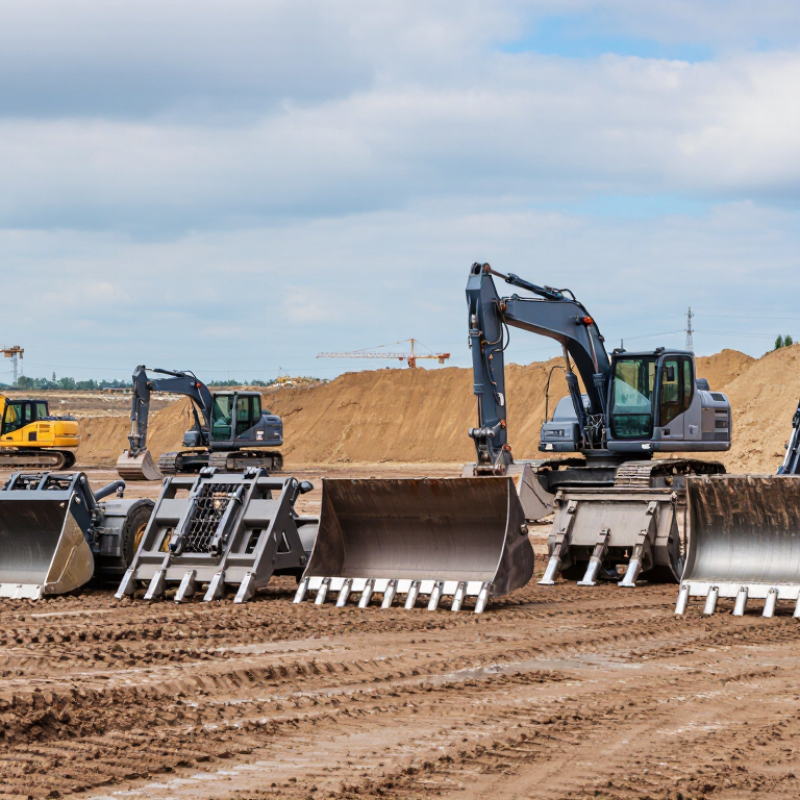
Moulded excavator buckets serve different ground conditions and production needs. Standard buckets suit general soil, sand, and loose gravel. Their moderate capacity supports loading, trenching, and routine site work. Heavy-duty buckets use thicker side plates and reinforced cutting edges. They perform better in compacted soil and mixed aggregates. Rock buckets add wear-resistant liners and stronger teeth. Choose them for quarry faces, dense rock, and demolition debris.

Narrow trenching buckets create clean channels around pipes and cables. Their reduced width improves control in confined spaces. Ditching buckets are wider and smoother. They help shape drainage channels and embankment slopes. Skeleton buckets separate soil from stones through open bars. This design suits screening, landscaping, and recycling work. Tilt buckets provide hydraulic angle adjustment, often improving slope finishing. A wider bucket is not always better. Excessive width can reduce breakout force.

Grand View Research valued the global construction equipment market at about USD 181.6 billion in 2023. It forecasts approximately 5.3% annual growth from 2024 to 2030. Fortune Business Insights also reports steady excavator demand through 2032. These figures support long-term attachment investment, but they do not replace site testing. Buyers should compare bucket capacity, machine lifting force, steel grade, tooth layout, and local soil abrasiveness. Field inspections often reveal a weakness in catalog data. Rated volume may not reflect sticky clay or sharp basalt. Confirm the mould design with actual material samples before ordering.

Mould buckets are selected according to material, digging conditions, and the required finishing quality. General-purpose buckets are suitable for everyday excavation, while rock, skeleton, ditch-cleaning, trapezoidal, and grading buckets are designed for more specialized work. The scores show typical application suitability on a 1–5 scale and are not market-share figures.

How to Compare Mould Bucket Performance and Quality

2026 Best Mould Bucket Types for Global Buyers?

How to Compare Mould Bucket Performance and Quality

A mould bucket should match the excavator, soil, and daily workload. Start with bucket capacity, cutting width, and mounting dimensions. An oversized bucket may reduce cycle speed and increase hydraulic strain. A narrow bucket can improve control in trenches but may slow larger projects. Check the working drawings carefully. Small errors matter.

Inspect the steel grade and plate thickness in high-wear areas. The cutting edge, side walls, corners, and mounting brackets deserve close attention.

Look for continuous welds, even penetration, and clean finishing. Rough weld beads may hide weak preparation. They should not.

Measure the bucket after welding. Distortion can affect pin alignment and machine stability. A polished surface alone proves little.

Field testing gives stronger evidence than photographs. Fill the bucket with similar material and observe loading, dumping, and emptying. Watch for soil sticking inside the mould.

Check pin movement after repeated cycles. Excessive play suggests poor machining, weak bushings, or insufficient lubrication.

Ask for material certificates, dimensional records, load-test results, and inspection photographs. Documentation should match the actual bucket, not a standard sample.

This is where comparisons often become imperfect. Buyers may focus on price and forget downtime. A cheaper bucket can cost more when repairs interrupt a busy site.

Evaluate service access, replacement parts, and delivery consistency before choosing.

Key Buying Factors for Global Buyers in 2026

2026 Best Mould Bucket Types for Global Buyers?

Key Buying Factors for Global Buyers in 2026

For global buyers, the best mould bucket is not always the cheapest option. Round buckets suit general storage, while tapered designs stack efficiently and reduce warehouse space. Reinforced buckets work better for heavy contents or repeated handling. Choose the type after checking capacity, wall thickness, handle strength, and lid fit. Fit matters.

Material selection needs practical testing. Food-contact, chemical-resistance, and general-purpose grades have different performance requirements. Ask for material specifications, production samples, and test records before placing a large order. Recycled content may support sustainability targets, but its color, odor, and strength can vary. That detail is easy to overlook.

Tooling quality also affects cost and consistency. A precise mould can reduce flash, uneven walls, and deformed rims. Inspect the bucket after stacking, dropping, and opening the lid repeatedly. I have seen attractive samples fail during pallet transport because the handles were too thin. Do not judge durability by appearance alone. Request clear tolerances, packaging details, minimum order quantities, and production lead times. Verify export documents and labeling requirements for each destination. A supplier that answers quickly is useful, but documented evidence is more reliable. Even experienced buyers sometimes overvalue a low unit price. Total cost includes mould maintenance, defects, freight, storage, and replacement risk. Recheck the numbers.

International Standards, Customization, and Supplier Evaluation

2026 Best Mould Bucket Types for Global Buyers?

For global buyers, the best mould bucket is not always the cheapest injection-moulded option. PP buckets suit chemical resistance and repeated handling, while HDPE performs well under impact and temperature changes. Wall thickness, rib design, handle attachment, and rim stiffness should match the load. A 20-litre bucket filled with liquid stresses weak handles quickly. It happens more often than catalogues suggest.

International standards should guide specifications, not replace testing. ISO 9001 supports controlled production, but the ISO Survey 2023 recorded more than 1.2 million certified sites worldwide; certification alone does not prove every batch is consistent. Ask for resin traceability, dimensional inspection records, drop-test results, and migration documentation where food contact applies. Buyers should also check relevant ASTM, ISO, or regional requirements for stacking, leakage, and material safety. Requirements differ by destination.

Customization adds value when it solves a real handling problem. A wider grip, anti-slip base, embossed volume marks, or reinforced hinge can reduce field failures. However, extra ribs may increase cycle time and material use. UNEP’s 2023 report estimated that plastic pollution could be reduced by 80% by 2040 through system changes, reuse, and better design. That makes durability important, but recyclability should be discussed early. I would request pilot samples from at least two suppliers, then compare weight tolerance, odor, color stability, mold maintenance, and delivery records. One weakness remains: remote audits can miss factory realities. A live production inspection is more reliable.

2026 Best Mould Bucket Types for Global Buyers? - International Standards, Customization, and Supplier Evaluation
Mould Bucket Type Typical Application Common Material and Structure Key International Requirements Customization Options Recommended Supplier Evidence Overall Buyer Fit
General-Purpose Earth Bucket Excavation, trenching, loading and routine soil handling. Wear-resistant structural steel, reinforced side cutters, replaceable teeth and adapters. ISO 9001 quality system Welding quality control Material traceability Bucket width, pin diameter, ear spacing, tooth system, side cutters and wear strips. Dimensional inspection report, steel mill certificates, weld inspection records and load-test documentation. High
Heavy-Duty Rock Bucket Quarrying, blasted rock, hard-packed ground and abrasive aggregates. Thicker base and side plates, reinforced corners, high-strength wear bars and heavy-duty tooth system. Abrasion resistance Structural integrity Weld procedure control Additional wear plates, heel shrouds, side protectors, high-abrasion steel and custom tooth layout. Hardness data, abrasion-test results, welding procedure qualification and fatigue-risk review. High for severe duty
Heavy-Duty Digging Bucket Dense clay, compacted soil, mixed ground and demanding excavation cycles. Reinforced back, stronger sidewalls, high-strength cutting edge and replaceable wear components. Rated machine compatibility Pin-bore accuracy Weld quality Capacity, digging angle, tooth penetration, wear-package thickness and attachment interface. Prototype measurement report, fit-up record, hydraulic excavator compatibility data and field references without brand disclosure. High
Heavy-Duty Abrasion Bucket Sandstone, gravel, slag, recycled aggregate and highly abrasive materials. Replaceable internal wear liners, abrasion-resistant plates, reinforced lip and protected corners. Wear-life verification Steel identification Maintenance safety Modular liners, hard-facing, different plate grades, reinforced lip and optimized discharge profile. Wear mapping, liner replacement procedure, consumable availability plan and warranty conditions. High for abrasive work
Trenching Bucket Utility trenches, drainage channels, cable installation and narrow excavations. Narrow shell, tapered profile, reinforced cutting edge and optional teeth or smooth edge. Dimensional accuracy Attachment safety Machine load limits Working width, digging depth, side angle, pin dimensions and drainage profile. Technical drawing approval, width tolerance report, attachment-fit photographs and operating-load guidance. High for utilities
Grading and Ditching Bucket Final grading, slope shaping, ditch cleaning and site finishing. Wide smooth shell, long cutting edge, reinforced top beam and controlled side geometry. Edge straightness Dimensional consistency Safe lifting points Width, tilt or hydraulic-tilt preparation, side profile, drainage openings and quick-coupler interface. Flatness report, cutting-edge straightness data, hydraulic circuit specifications and trial-fit approval. High for finishing
Skeleton Sorting Bucket Screening soil, separating stones and preparing reusable fill material. Open grid made from wear-resistant bars, reinforced frame and replaceable cutting edge. Bar spacing control Structural weld inspection Pin compatibility Grid aperture, bar diameter, bucket width, reinforcement level and tooth configuration. Grid-opening inspection, weld visual inspection, material certificates and representative test samples. High for sorting
Clamshell or Orange-Peel Bucket Bulk material handling, deep excavation, dredging and vertical lifting operations. Multiple shells or jaws, hydraulic or rope-operated mechanism, pins, bearings and wear edges. Lifting safety Hydraulic safety Risk assessment Jaw volume, shell shape, hydraulic pressure, material density, suspension type and discharge opening. Functional cycle test, hydraulic pressure test, lifting-point verification, risk assessment and maintenance manual. Specialized
Tilt Bucket Slope finishing, ditch shaping, landscaping and precision grading. Wide bucket with hydraulic pivot, reinforced hinge structure, cylinders and protected hoses. Hydraulic integrity Pin retention Operator safety Tilt angle, hydraulic cylinder size, hose routing, control-valve arrangement and quick-coupler type. Pressure-hold test, cylinder inspection record, hose protection review and compatibility confirmation. High for precision work
High-Capacity Light-Material Bucket Grain, wood chips, snow, compost and other low-density bulk materials. Large-volume lightweight shell, reinforced upper frame and smooth or bolt-on cutting edge. Rated capacity Center-of-gravity review Payload limitation Volume, spill guard, bolt-on edge, side extensions, corrosion protection and material-specific profile. Volume calculation, center-of-gravity data, rated-load statement and corrosion-protection specification. High for low-density loads
Quick-Coupler Compatible Bucket Fleet operations requiring rapid attachment changes across multiple work tools. Purpose-built coupler interface, locking components, reinforced ears and replaceable wear parts. Interface accuracy Lock verification Attachment safety Coupler dimensions, automatic or manual locking, pin geometry, safety indicator and bucket profile. Coupler fit test, lock-function test, tolerance chart, compatibility matrix and user maintenance instructions. High for mixed fleets
Buyer note: International standards normally support quality, safety and traceability, but the correct bucket must also match the excavator operating weight, hydraulic system, pin interface, material density, working environment and local import requirements. Request approved drawings and a documented inspection plan before production.